Inverse Fintech: Research Prospectus (Zenodo)
SaveSummary
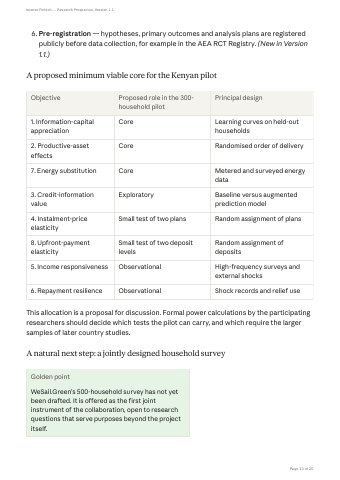
- Inverse Fintech proposes eight ranked research objectives, to be tested first in a planned 300-household pilot in Kenya.p.2
- The framework puts access to productive physical assets before the financial information on which credit assessment normally depends.p.1
- A Kenyan study cited in the prospectus found that replacing high deposits with asset-collateralised loans raised take-up from 2.4% to 41.9%.p.12
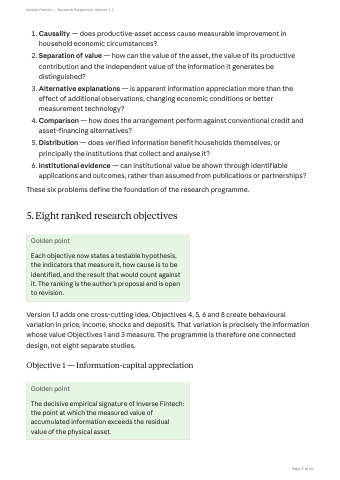
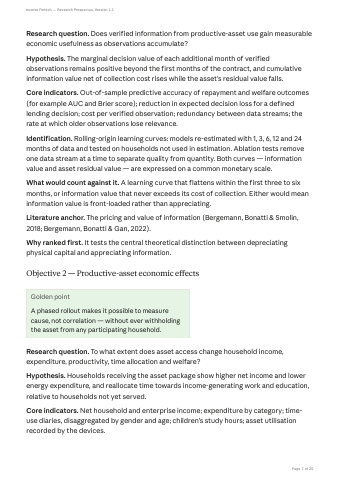
- Objective 1 tests information value with models re-estimated using 1, 3, 6, 12 and 24 months of data.p.7
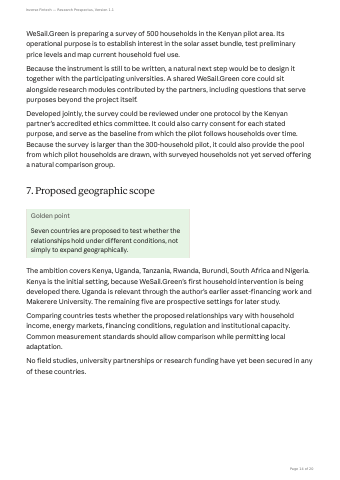
- WeSail.Green is preparing a survey of 500 households in the Kenyan pilot area.p.14
- A randomised study of 1,000 Nairobi households is cited as evidence that charcoal savings from an efficient stove matched engineering estimates.p.11
Key insights
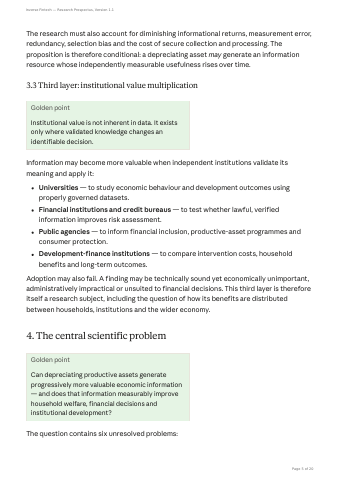
- The core hypothesis is that the physical asset depreciates while verified knowledge appreciates, and these are presented as hypotheses to be tested, not demonstrated outcomes.p.1
- Objective 1 holds that the marginal decision value of each additional month of verified observations stays positive beyond the first months of the contract.p.7
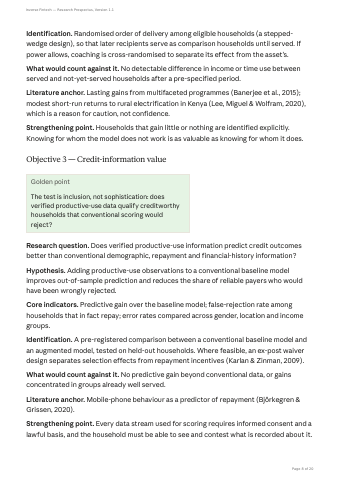
- A stepped-wedge design with randomised order of delivery would let later recipients serve as comparison households until served.p.8
- In Kenya, replacing high deposits with asset-collateralised loans raised take-up from 2.4% to 41.9%, with only small selection effects.p.12
- The planned survey of 500 households is offered as the first joint instrument of the university collaboration.p.14
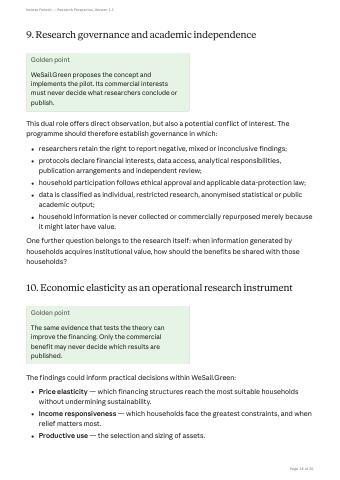
- Researchers must keep the right to report negative, mixed or inconclusive findings despite the commercial interests of the pilot operator.p.16
Pages
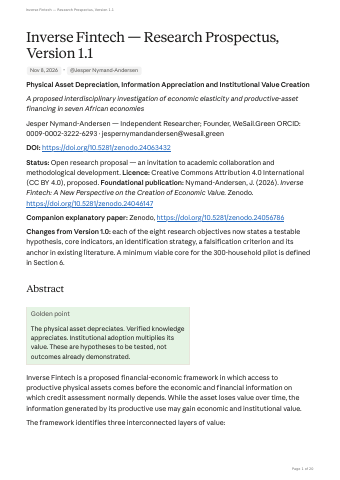 p.1
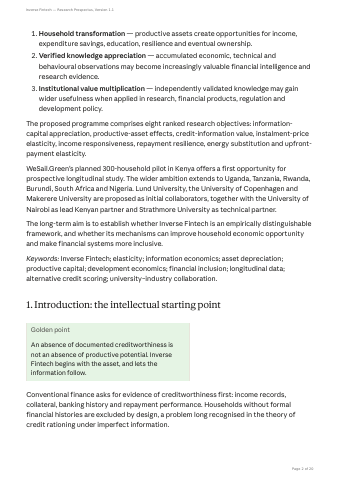 p.2
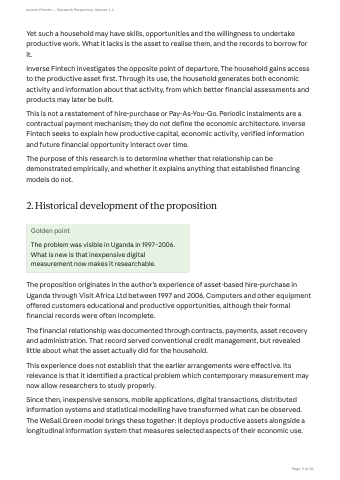 p.3
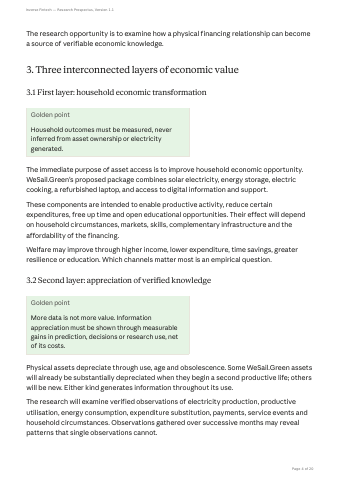 p.4
 p.5
 p.6
 p.7
 p.8
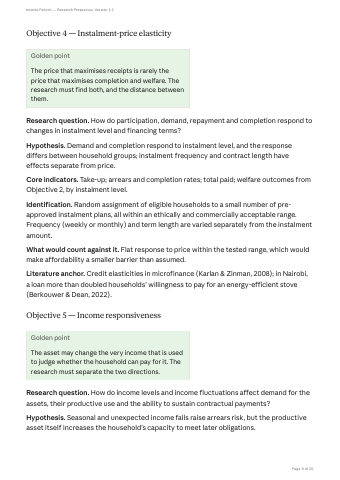 p.9
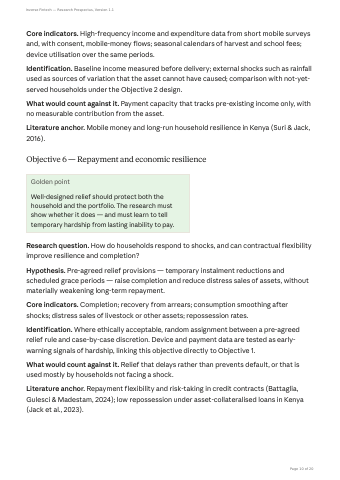 p.10
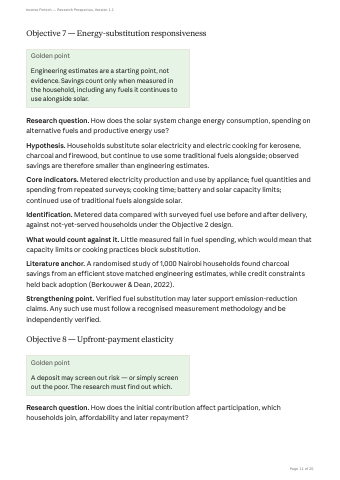 p.11
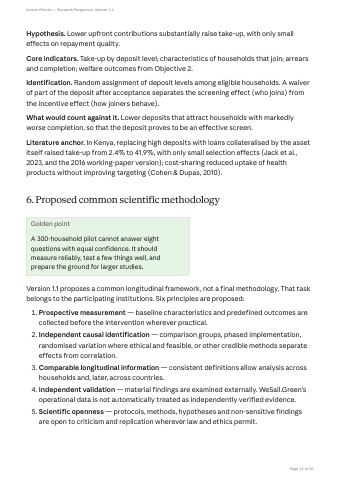 p.12
 p.13
 p.14
 p.15
 p.16
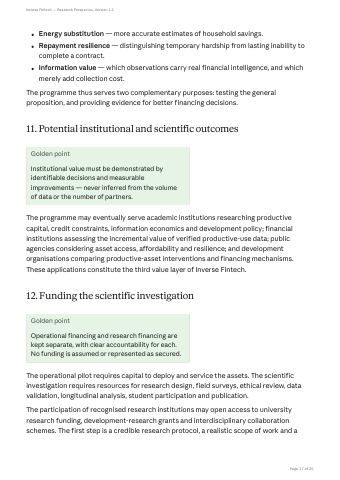 p.17
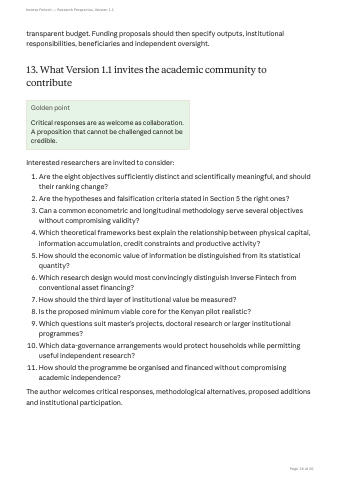 p.18
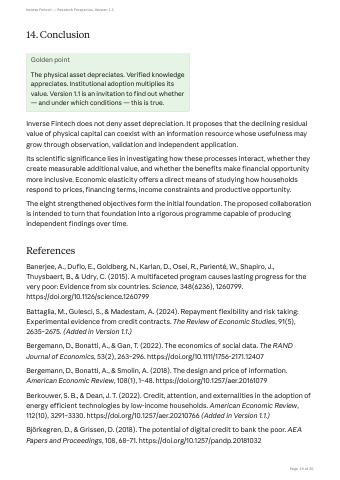 p.19
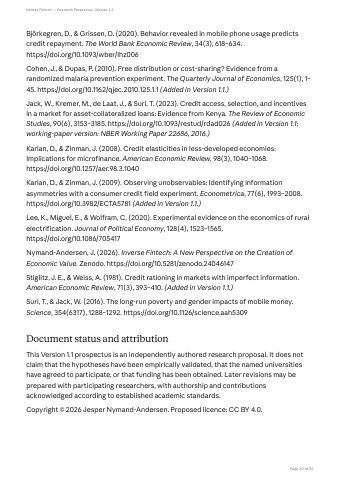 p.20
Funders mentioned
Topics and entities
Summary and figures generated from the document and checked automatically: every number shown appears on the cited page. Publishers can request removal.