Housing Yields (Journal of Financial and Quantitative Analysis)
SaveSummary
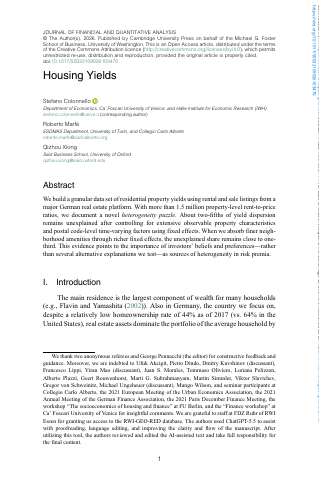
- The study builds a granular data set with more than 1.5 million property-level rent-to-price ratios from a major German real estate platform.p.1
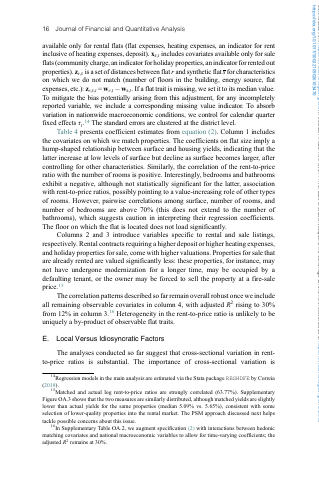
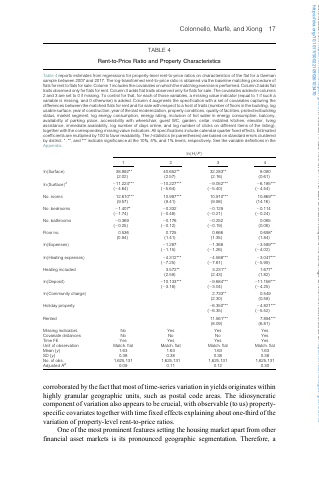
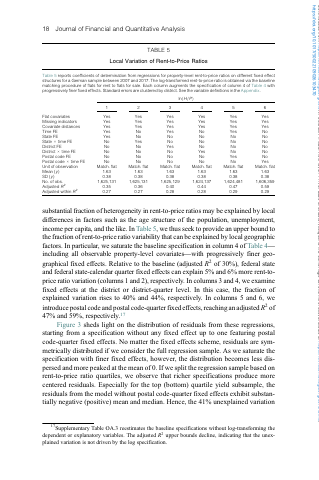
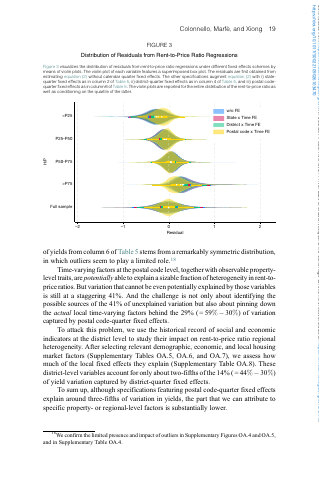
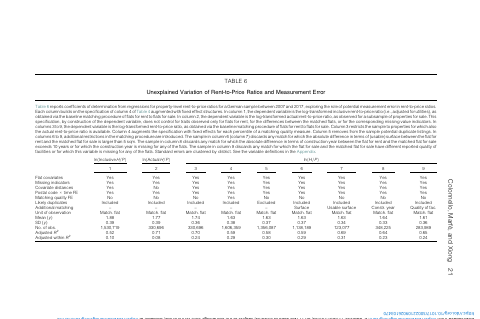
- Unexplained heterogeneity in yields remains large at 41% based on the adjusted R2, after property traits and postal code-quarter fixed effects.p.3
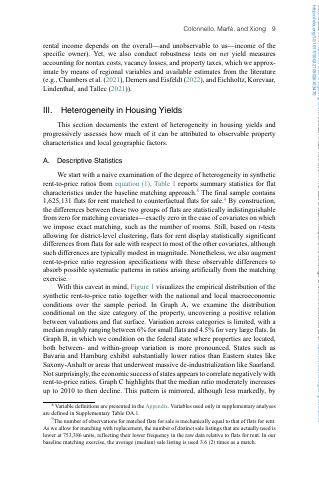
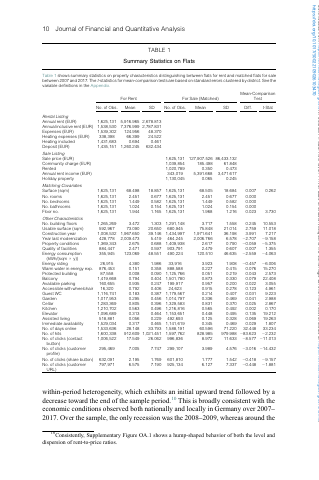
- The final sample contains 1,625,131 flats for rent matched to counterfactual flats for sale.p.9
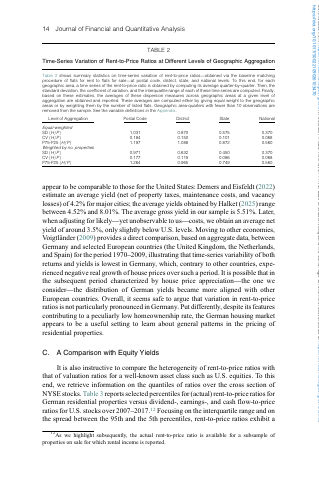
- The average gross yield in the sample is 5.51%.p.14
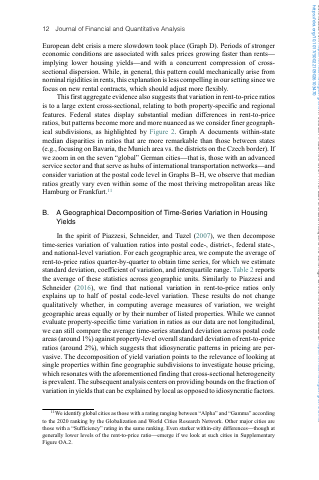
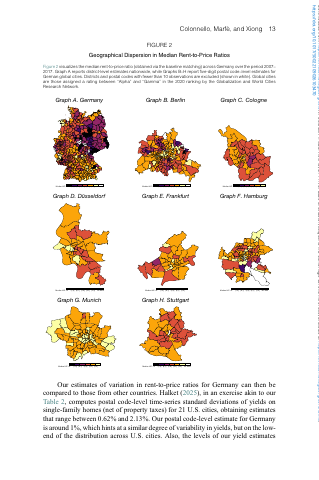
- Postal code-level time-series standard deviation of yields in Germany is around 1%, versus 0.62% to 2.13% across 21 U.S. cities.p.13
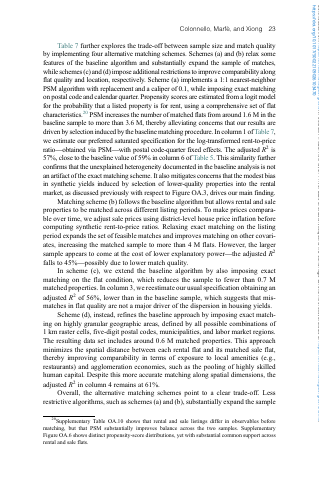
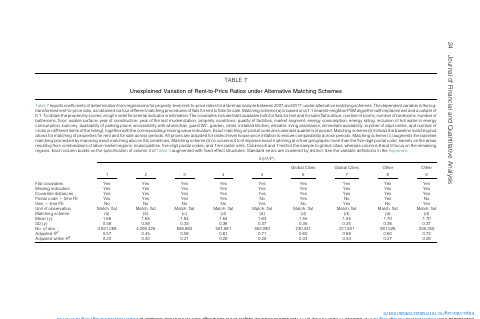
- Propensity-score matching gives an adjusted R2 of 57%, close to the baseline value of 59%.p.23
Key insights
- Housing yields vary greatly across regions and even across postal codes within the same city.p.3
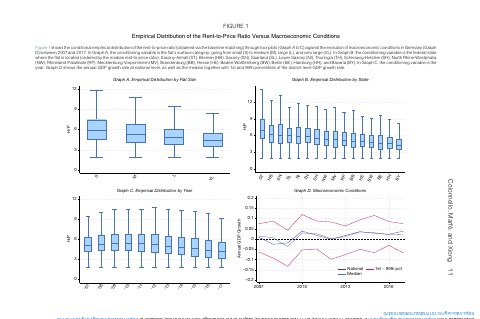
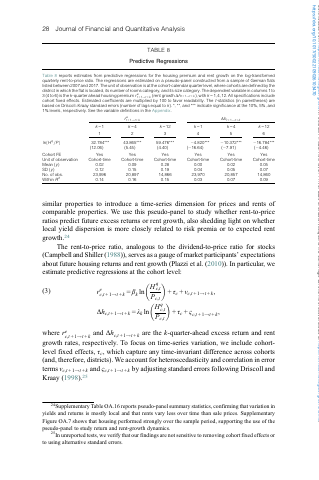
- Macroeconomic fluctuations account for only up to half of time-series variation in rent-to-price ratios.p.3
- The sample after screening has 5,100,753 rental listings and 1,982,461 sale listings.p.6
- Listed rather than transaction prices are used, so prices are likely upward biased, although the bias should partly cancel in ratios.p.6
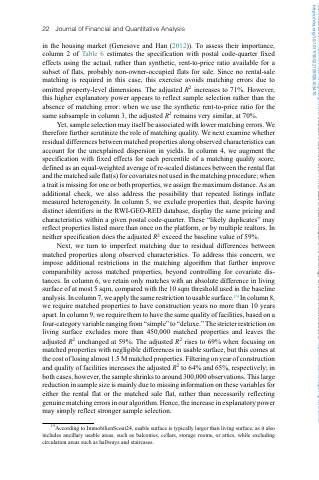
- The adjusted R2 for the actual rent-to-price ratio subsample is 71%, against 70% for the synthetic ratio on the same subsample.p.22
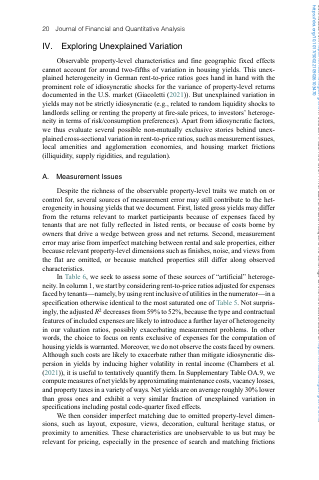
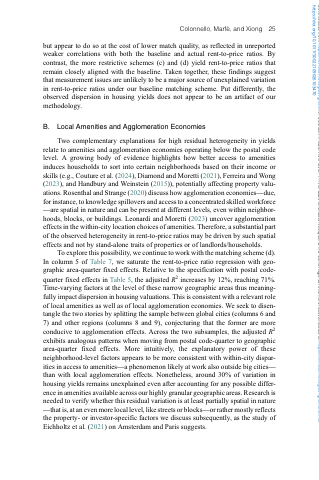
- Measurement issues are unlikely to be a major source of unexplained variation in rent-to-price ratios.p.25
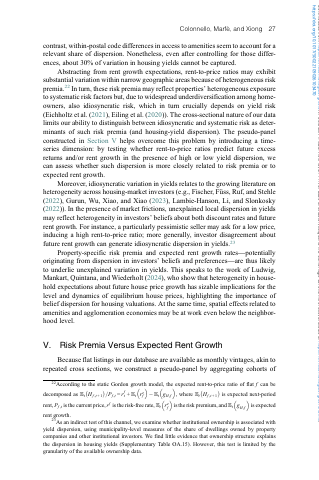
- Dispersion in investors' beliefs and preferences emerges as a possible crucial force behind the unexplained variation.p.4
Pages
 p.1
 p.2
 p.3
 p.4
 p.5
 p.6
 p.7
 p.8
 p.9
 p.10
 p.11
 p.12
 p.13
 p.14
 p.15
 p.16
 p.17
 p.18
 p.19
 p.20
 p.21
 p.22
 p.23
 p.24
 p.25
 p.26
 p.27
 p.28
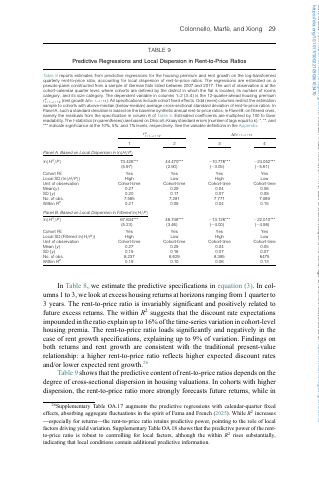 p.29
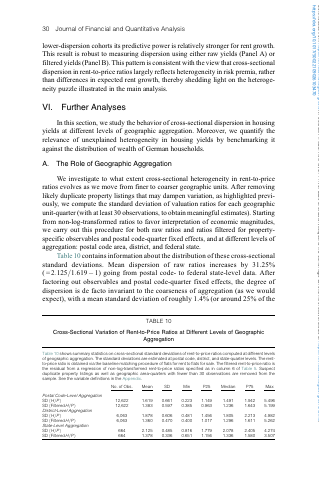 p.30
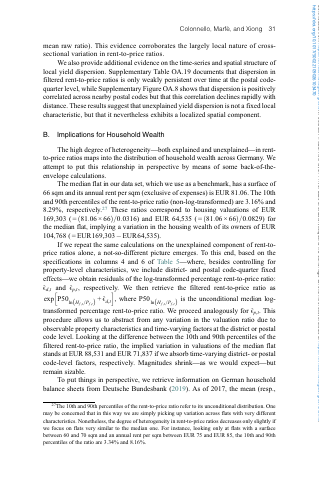 p.31
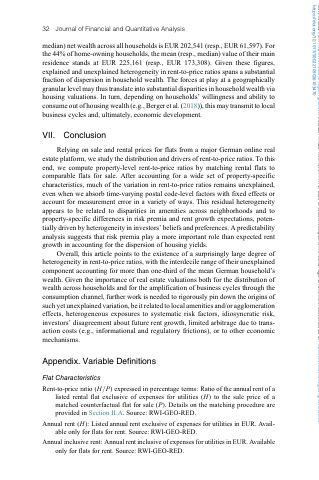 p.32
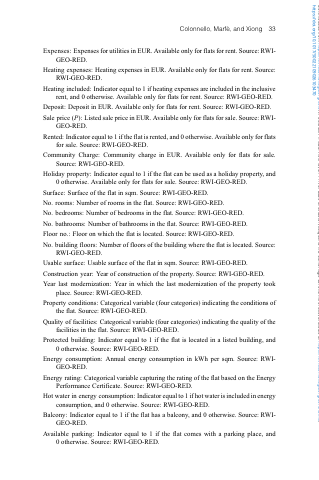 p.33
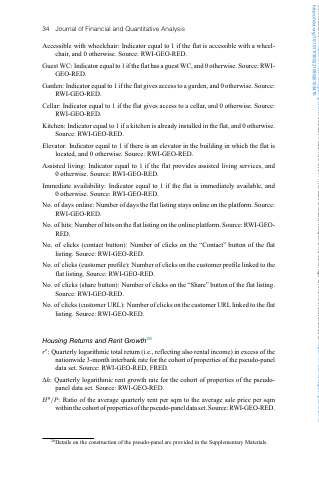 p.34
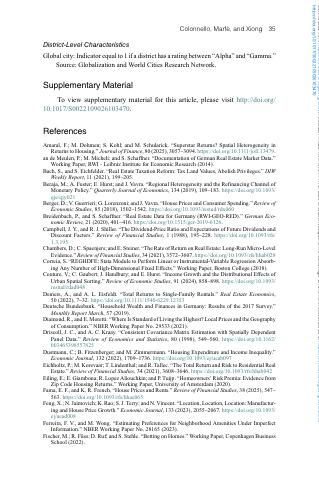 p.35
 p.36
Funders mentioned
Topics and entities
Summary and figures generated from the document and checked automatically: every number shown appears on the cited page. Publishers can request removal.