Global Comovement, Domestic Heterogeneity, and the Natural Rate of Interest: Evidence from the G20 (Research Square)
SaveSummary
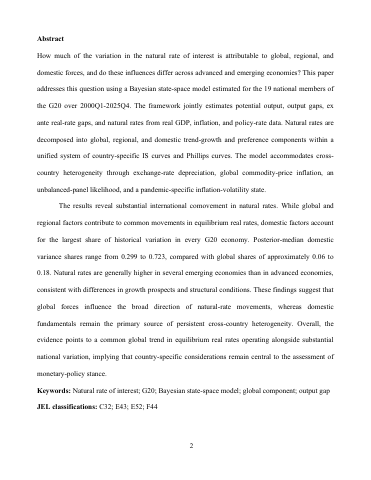
- A Bayesian state-space model is estimated for the 19 national members of the G20 over 2000Q1-2025Q4.p.3
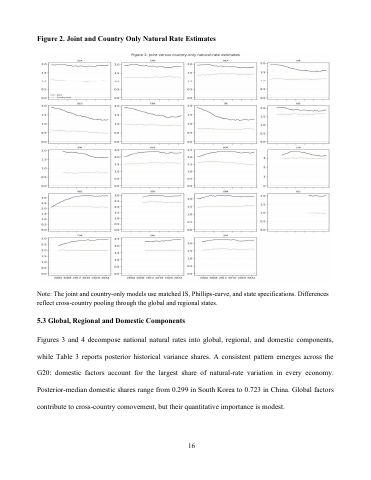
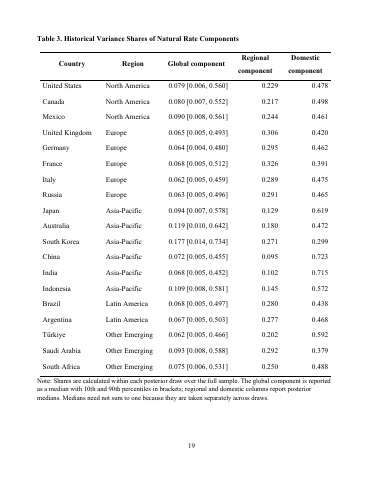
- Posterior-median domestic variance shares range from 0.299 to 0.723, compared with global shares of approximately 0.06 to 0.18.p.3
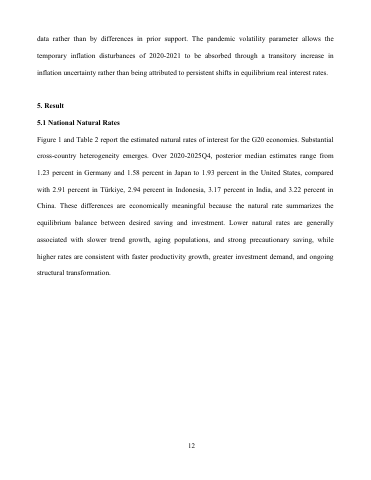
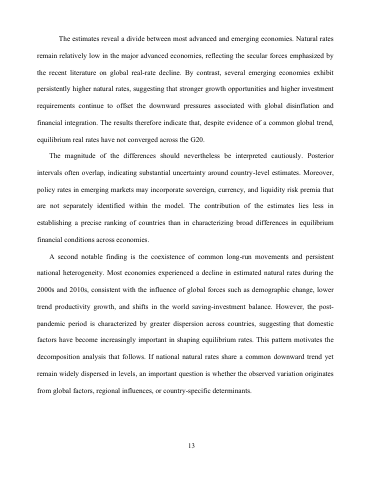
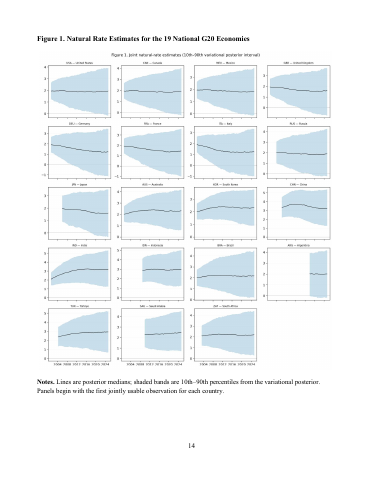
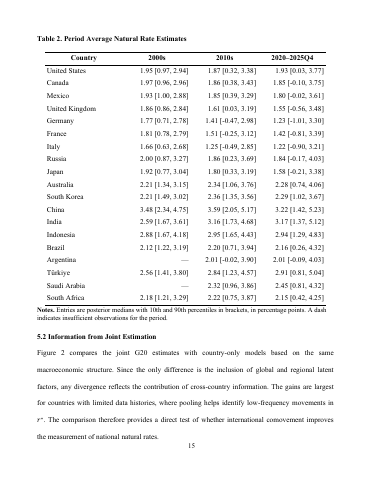
- Natural rates range from 1.23% in Germany, 1.58% in Japan and 1.93% in the United States to 2.91% in Türkiye, 2.94% in Indonesia, 3.17% in India and 3.22% in China.p.13
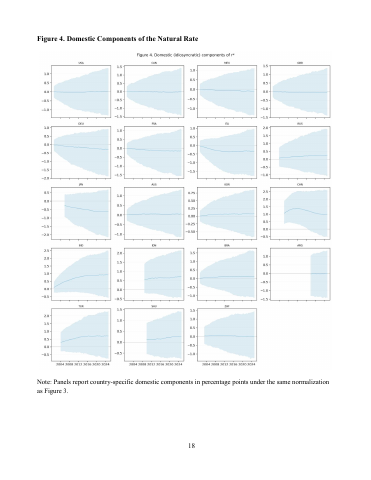
- Posterior-median domestic shares range from 0.299 in South Korea to 0.723 in China.p.17
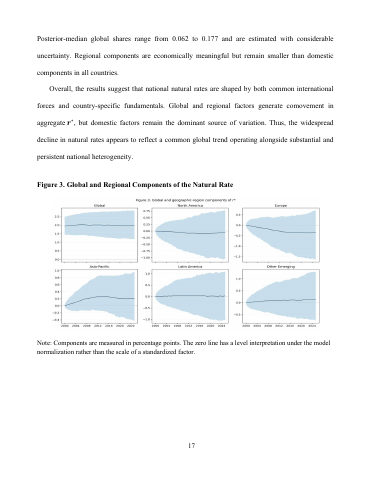
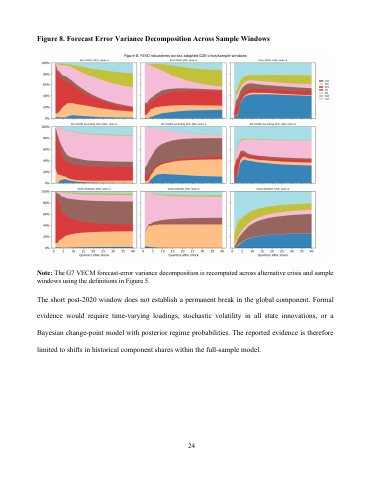
- Posterior-median global shares range from 0.062 to 0.177 and are estimated with considerable uncertainty.p.18
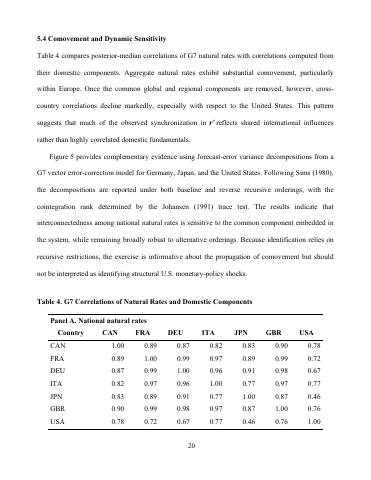
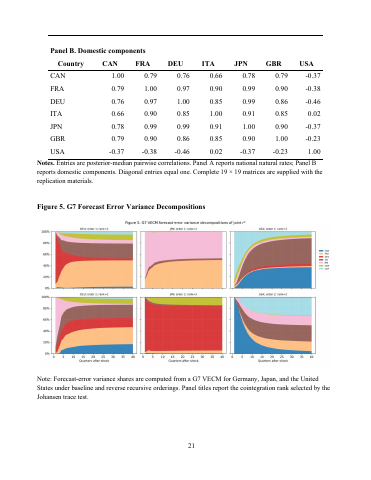
- Equilibrium real rates have not converged across the G20 despite evidence of a common global trend.p.14
Key insights
- Domestic factors account for the largest share of natural-rate variation in every G20 economy.p.17
- Global forces contribute to comovement, but their quantitative importance is modest, with shares from 0.062 to 0.177.p.18
- Natural rates are generally higher in several emerging economies than in advanced economies.p.14
- Posterior intervals often overlap, so country-level estimates carry substantial uncertainty.p.14
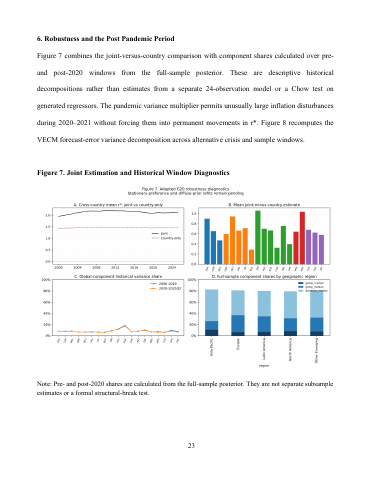
- The post-pandemic period shows greater dispersion across countries, suggesting domestic factors have become more important.p.14
- The widespread decline in natural rates appears to reflect a common global trend alongside substantial and persistent national heterogeneity.p.18
- The model does not separately identify sovereign, currency and liquidity risk premia in emerging-market rates.p.27
Pages
 p.1
 p.2
 p.3
 p.4
 p.5
 p.6
 p.7
 p.8
 p.9
 p.10
 p.11
 p.12
 p.13
 p.14
 p.15
 p.16
 p.17
 p.18
 p.19
 p.20
 p.21
 p.22
 p.23
 p.24
 p.25
 p.26
 p.27
 p.28
 p.29
 p.30
Funders mentioned
Topics and entities
Summary and figures generated from the document and checked automatically: every number shown appears on the cited page. Publishers can request removal.