Financing the Renewable Energy Transition in Sub-Saharan Africa: A Systematic Review of Investment Instruments, Market Models and Institutional Constraints (Research Square)
Summary
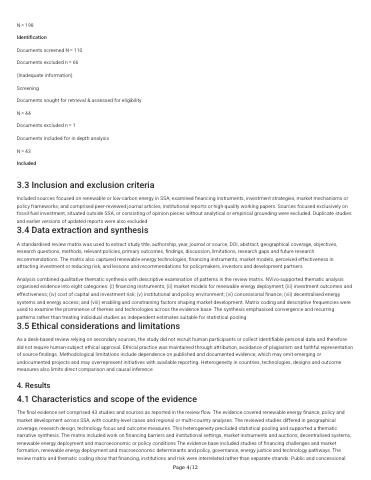
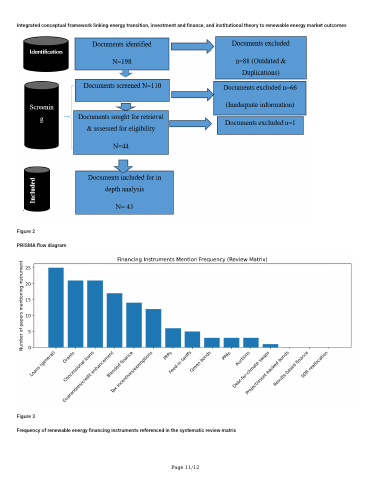
- An initial database search yielded 198 records concerning renewable energy financing in Sub-Saharan Africa.p.2
- A total of 88 outdated or duplicate records were removed prior to screening.p.2
- Screening was conducted on 110 documents, leading to the exclusion of 66 sources due to inadequate information.p.2
- Full texts were retrieved and assessed for 44 eligibility candidates, with 1 study subsequently excluded.p.2
- A final synthesis was conducted across 43 included studies using qualitative thematic analysis.p.2
Key insights
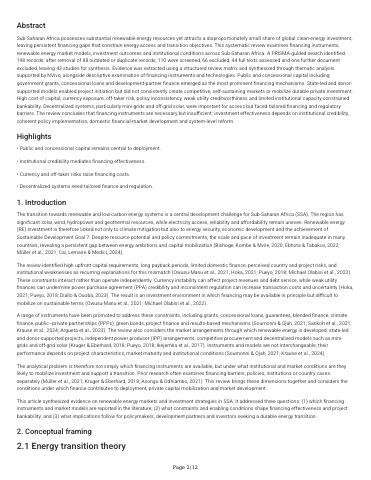
- Public and concessional capital remains the primary financing driver for renewable energy projects across Sub-Saharan Africa.p.2
- State-led and donor-supported market models help initiate projects but fail to build competitive or self-sustaining investment environments.p.2
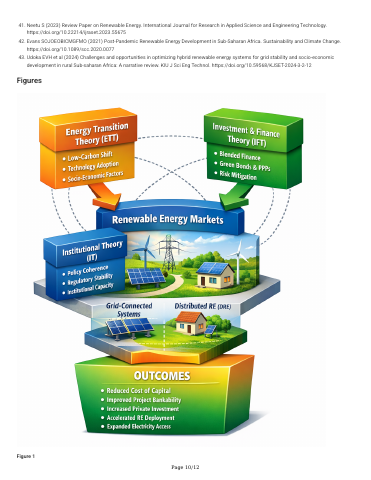
- High cost of capital, off-taker risk, currency exposure, and weak utility creditworthiness severely restrict private sector bankability.p.2
- Decentralized systems such as off-grid solar and mini-grids are critical for access but encounter specific regulatory and financing barriers.p.2
- Institutional credibility directly mediates the effectiveness of financing instruments and impacts capital availability.p.6
- State-owned utility financial distress and payment delays undermine power purchase agreements and discourage private investments.p.6
- Long-term market transformation requires systemic reforms, including utility balance-sheet strengthening and local financial market development.p.7
Pages
 p.1
 p.2
 p.3
 p.4
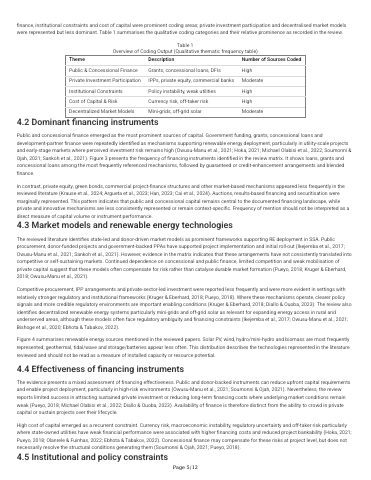 p.5
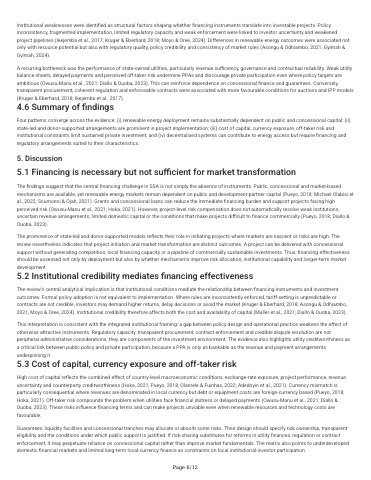 p.6
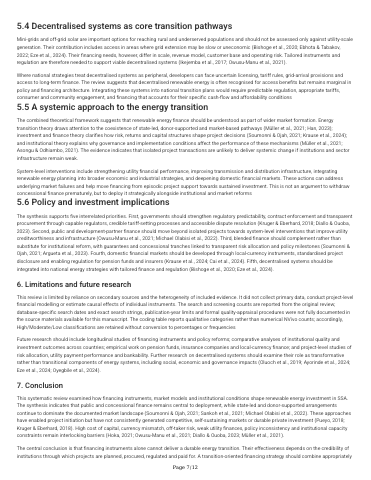 p.7
 p.8
 p.9
 p.10
 p.11
 p.12
Topics and entities
Summary and figures generated from the document and checked automatically: every number shown appears on the cited page. Publishers can request removal.