ESG Assessment of 12 Chinese SMEs: The Proposal of a Two-stage Framework (American Journal of Management Science and Engineering)
SaveSummary
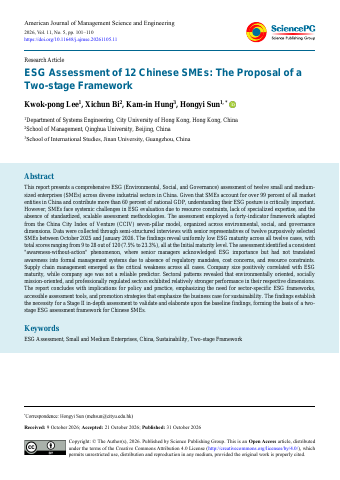
- SMEs account for over 99 percent of all market entities in China and contribute more than 60 percent of national GDP.p.1
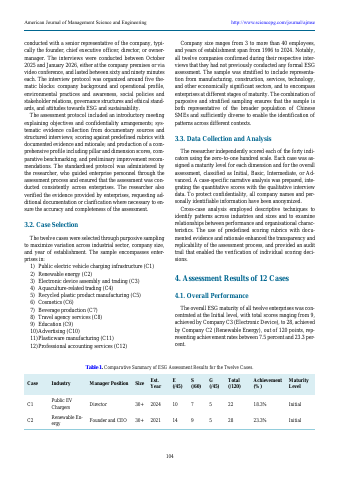
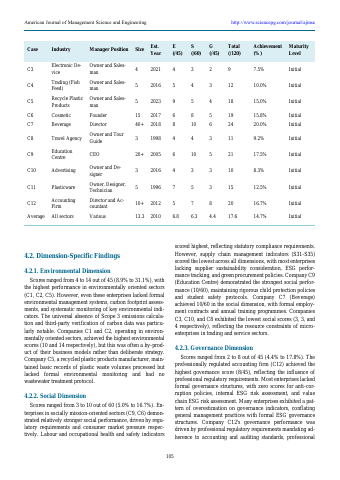
- Total ESG scores of the twelve assessed SMEs ranged from 9 to 28 out of 120 (7.5% to 23.3%), all at the Initial maturity level.p.1
- Interviews with senior representatives were held between October 2025 and January 2026.p.1
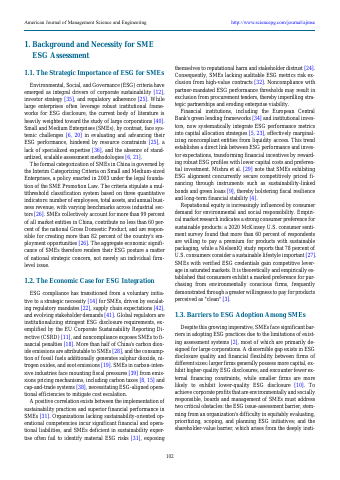
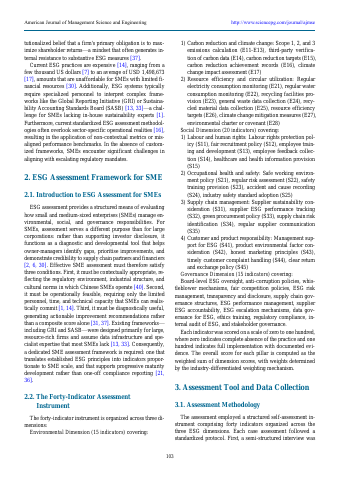
- Current ESG practices are expensive, with an average cost cited at USD 1,498,673, which is unaffordable for SMEs with limited financial resources.p.3
Key insights
- The findings reveal uniformly low ESG maturity across all twelve cases.p.1
- Senior managers acknowledged ESG importance but had not translated awareness into formal management systems.p.1
- Companies range from 3 to more than 40 employees, and all twelve confirmed they had not previously conducted a formal ESG assessment.p.4
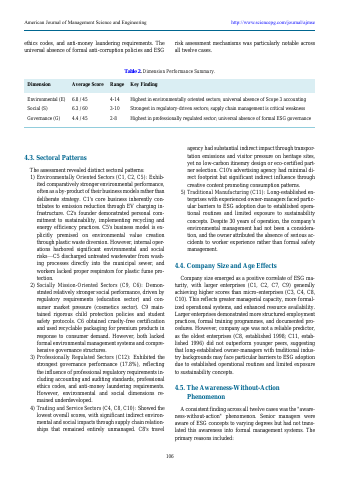
- Governance scores were the lowest on average, with a universal absence of formal ESG governance.p.6
- Supply chain management was the critical weakness in the social dimension.p.6
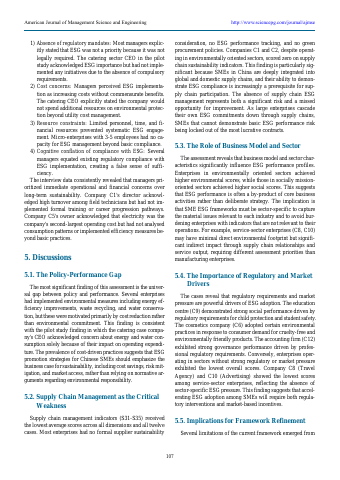
- Managers cited the absence of regulatory mandates and cost concerns as reasons for not prioritising ESG.p.7
- SMEs that cannot demonstrate basic ESG performance risk being locked out of the most lucrative supply chain contracts.p.7
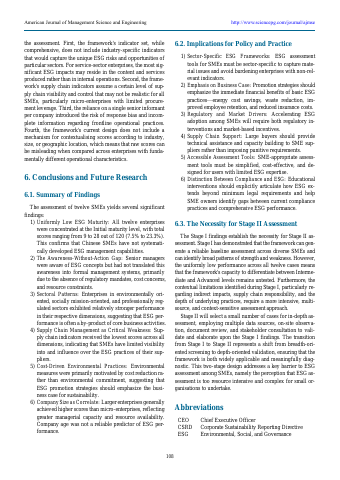
- ESG assessment tools for SMEs should be sector-specific, and the framework lacks a mechanism to contextualise scores by industry, size or location.p.8
Pages
 p.1
 p.2
 p.3
 p.4
 p.5
 p.6
 p.7
 p.8
 p.9
 p.10
Topics and entities
Summary and figures generated from the document and checked automatically: every number shown appears on the cited page. Publishers can request removal.