Designing a Regulatory Framework for an Inclusive and Sustainable Banking in Zimbabwe (The Dyke)
Summary
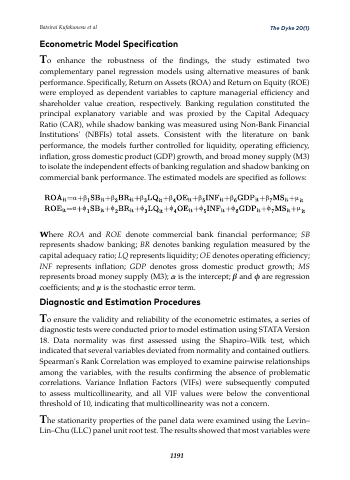
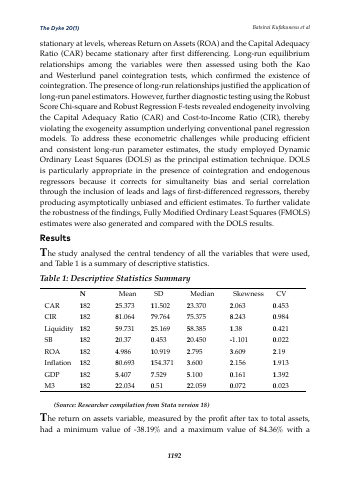
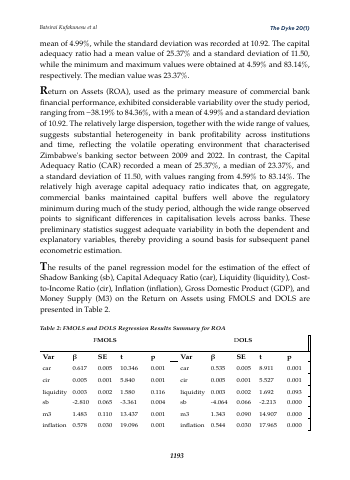
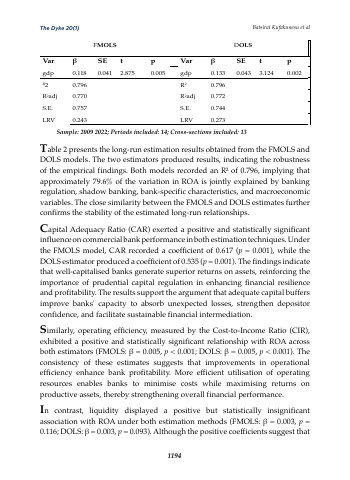
- The long-run FMOLS and DOLS models accounted for 79.6% of the variation in commercial banks' Return on Assets.p.16
Key insights
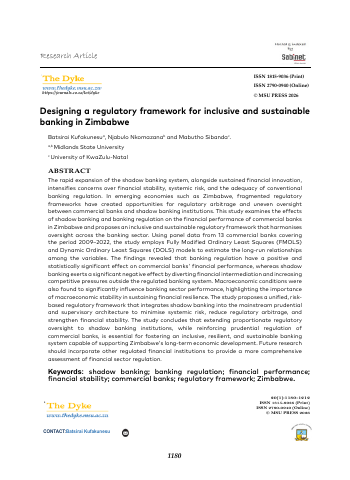
- Banking regulation via capital adequacy requirements exerts a positive and statistically significant influence on commercial bank profitability in Zimbabwe.p.2
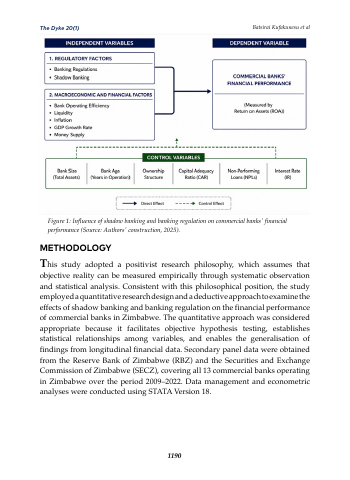
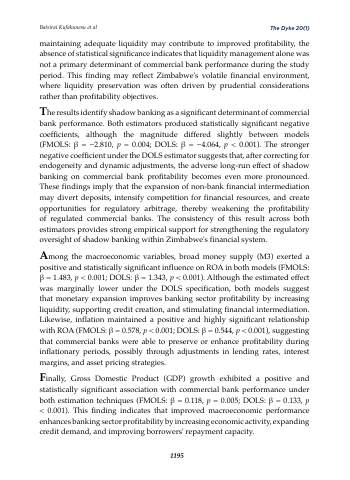
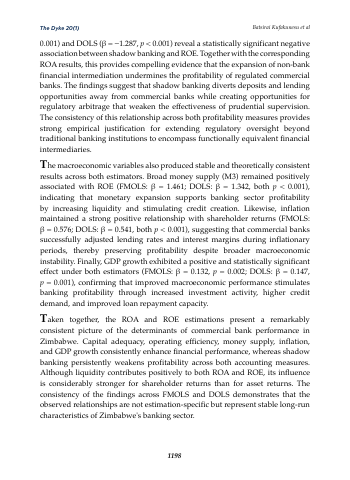
- Shadow banking activities negatively impact commercial bank performance by diverting deposits, escalating competitive pressure, and creating regulatory arbitrage.p.17
- Operating efficiency shows a positive statistical relationship with asset profitability across both FMOLS and DOLS long-run estimators.p.16
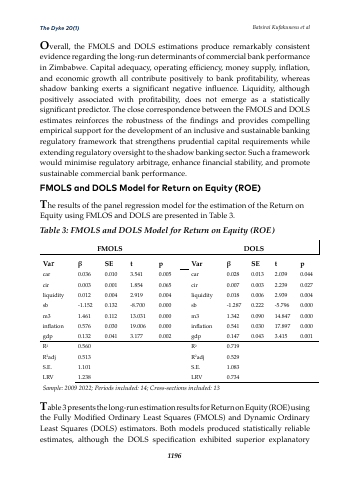
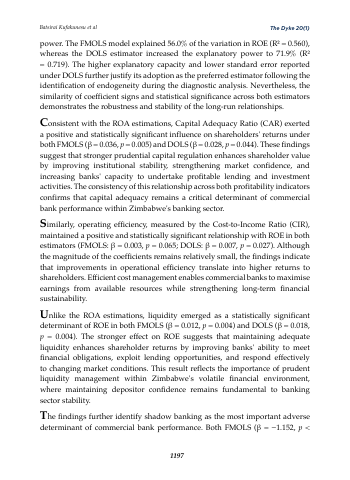
- Maintaining liquidity significantly supports shareholder returns (ROE), though its direct impact on asset returns (ROA) remains statistically insignificant.p.19
- Macroeconomic factors including broad money supply (M3), inflation, and GDP growth positively influence commercial bank profitability in Zimbabwe.p.20
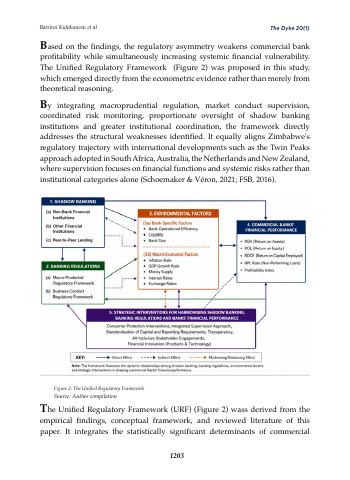
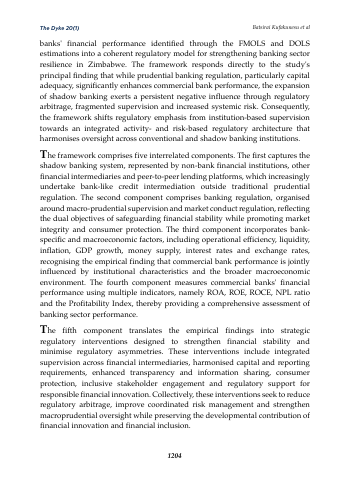
- The authors propose a Unified Regulatory Framework to transition Zimbabwe from siloed institution-based oversight to an integrated risk- and activity-based architecture.p.26
Pages
 p.1
 p.2
 p.3
 p.4
 p.5
 p.6
 p.7
 p.8
 p.9
 p.10
 p.11
 p.12
 p.13
 p.14
 p.15
 p.16
 p.17
 p.18
 p.19
 p.20
 p.21
 p.22
 p.23
 p.24
 p.25
 p.26
 p.27
 p.28
 p.29
 p.30
 p.31
 p.32
 p.33
 p.34
Topics and entities
Summary and figures generated from the document and checked automatically: every number shown appears on the cited page. Publishers can request removal.