Causes of Technology-Firm IPO Failure and Lessons for Compliance: A Case Study of WeWork's Withdrawn Listing (Academic research)
Summary
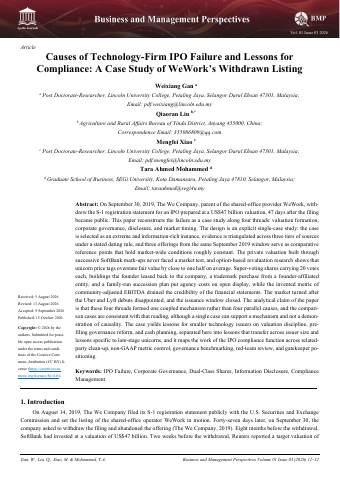
- The We Company withdrew its S-1 registration statement 47 days after public filing, abandoning a US$47 billion private valuation.p.1
- Option-pricing revaluation models indicate that venture capital preferred stock terms cause unicorn valuation tags to overstate fair value by 48% on average.p.4
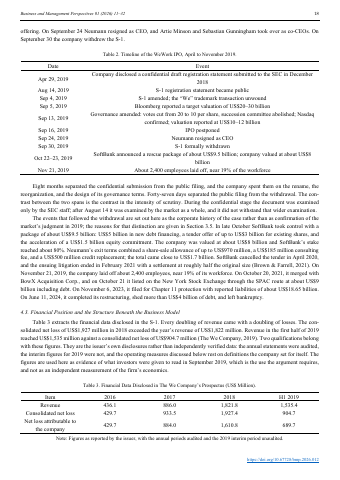
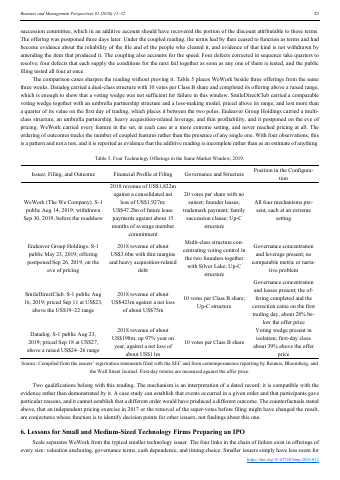
- In 2018, WeWork generated revenue of US$1,822 million while incurring a consolidated net loss of US$1,927 million.p.8
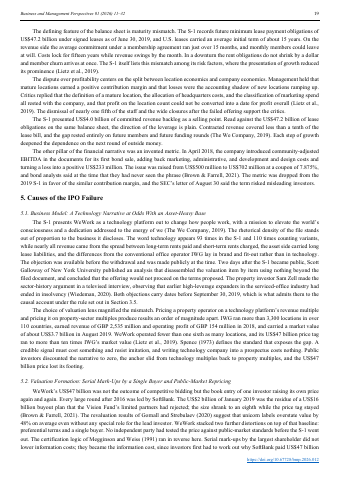
- The company operated with a extreme structural maturity mismatch, holding US$47.2 billion in future minimum lease commitments against member agreements averaging 15 months.p.9
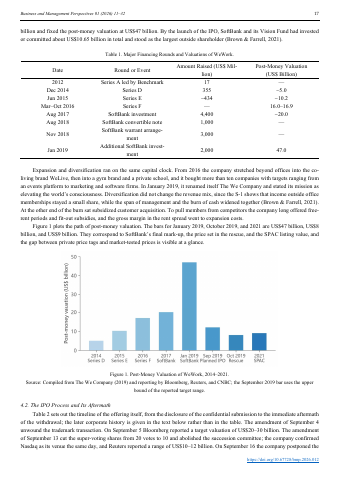
- Following the offering withdrawal, SoftBank provided a rescue package of about US$9.5 billion that revalued the company at about US$8 billion.p.8
- In November 2019, WeWork laid off about 2,400 employees, representing near 19% of its workforce.p.8
Key insights
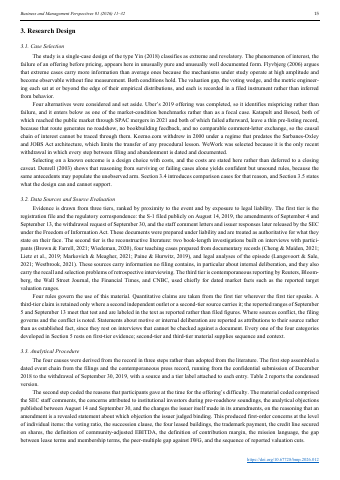
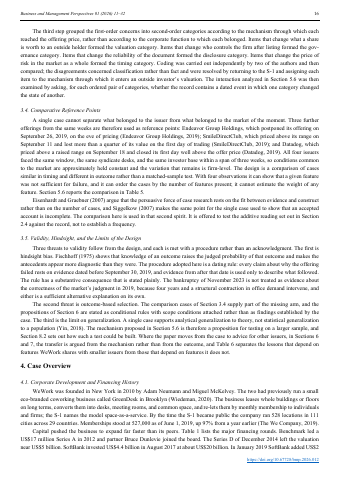
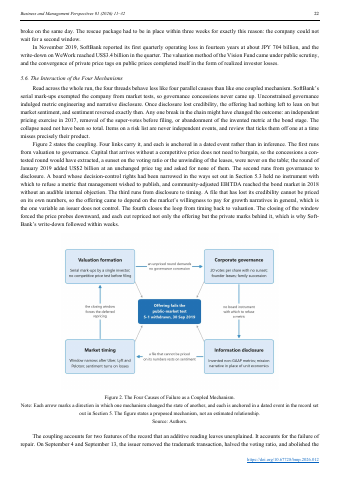
- The research shows that valuation formation, governance, disclosure quality, and market timing operated as a single coupled failure mechanism rather than four separate causes.p.12
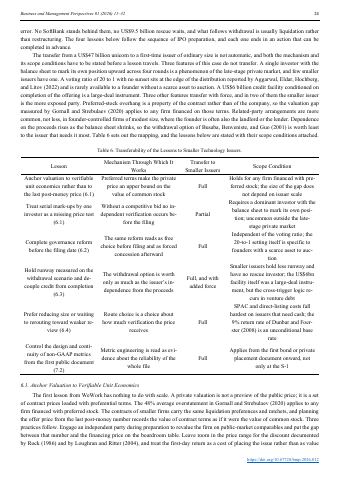
- Private mark-ups led by a single major investor bypass market verification and enable governance defects to accumulate unchecked.p.12
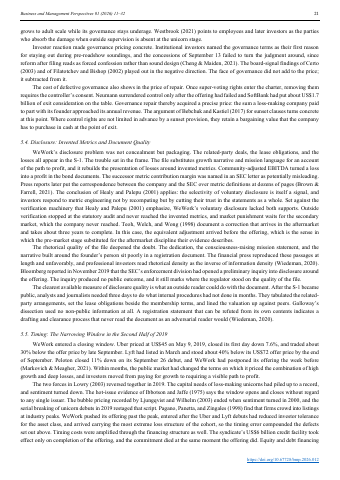
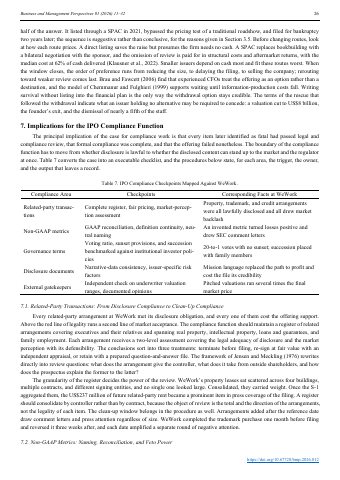
- Custom non-GAAP metrics like community-adjusted EBITDA erode overall disclosure credibility and invite regulatory scrutiny.p.9
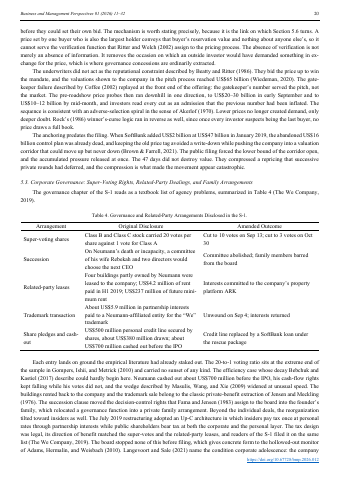
- Dual-class voting share structures carrying 20 votes per share without sunset clauses expand agency costs and depress institutional investor demand.p.10
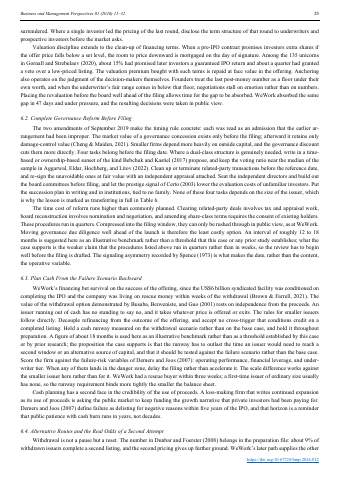
- Implementing governance reforms after an S-1 public filing acts as forced concession rather than a positive governance signal.p.15
- Maintaining liquidity based on an IPO failure scenario is critical for preserving an issuer's independence and bargaining leverage.p.15
- Strict legal compliance with disclosure rules is insufficient if the document fails to meet market standards for transparency.p.16
Pages
 p.1
 p.2
 p.3
 p.4
 p.5
 p.6
 p.7
 p.8
 p.9
 p.10
 p.11
 p.12
 p.13
 p.14
 p.15
 p.16
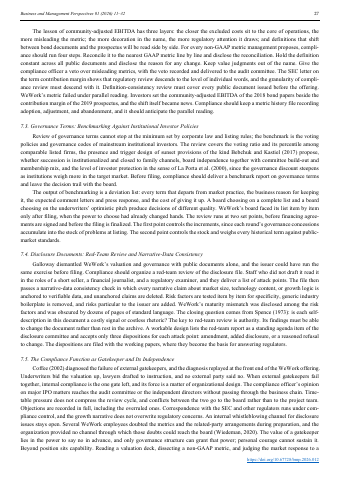 p.17
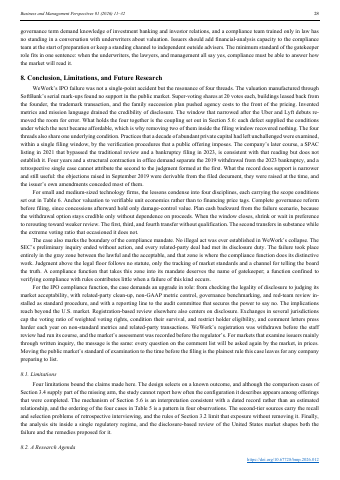 p.18
 p.19
 p.20
 p.21
Topics and entities
Summary and figures generated from the document and checked automatically: every number shown appears on the cited page. Publishers can request removal.