Biodiversity Credits and Carbon Markets as Financing Mechanisms for Environmental Sustainability in Nigeria: A Policy and Research Review (Academic research)
SaveSummary
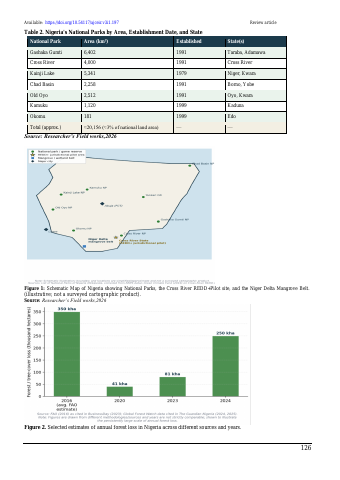
- Nigeria's forest area declined from approximately 26.5 million hectares in 1990 to 21.6 million hectares in 2020.p.2
- Global Forest Watch-derived figures put 2023 natural forest loss at 81,200 hectares, with emissions of 54.6 million tonnes of CO2.p.2
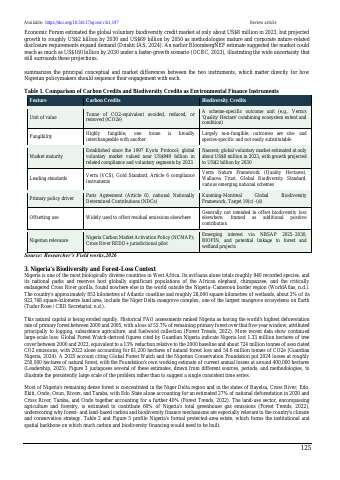
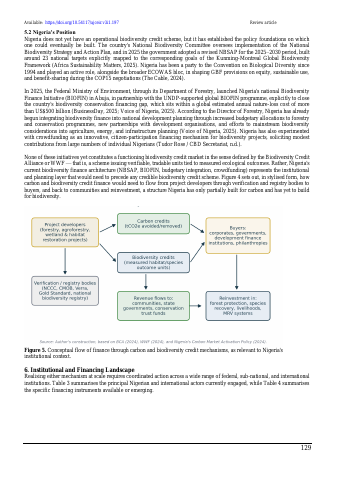
- The global voluntary biodiversity credit market was only about US$8 million in 2023, projected to reach roughly US$2 billion by 2030 and US$69 billion by 2050.p.3
- Net zero by 2060 is estimated to require approximately US$1.9 trillion in cumulative investment, of which at least US$410 billion above business-as-usual spending.p.5
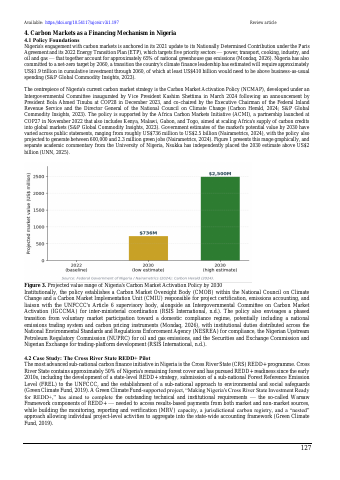
- Government estimates of the carbon market's potential value by 2030 range from roughly US$736 million to US$2.5 billion.p.5
- The revised NBSAP for 2025–2030 is built around 23 national targets mapped to the Kunming-Montreal Global Biodiversity Framework.p.7
Key insights
- An earlier BloombergNEF estimate of up to US$160 billion by 2030 illustrates the wide uncertainty around biodiversity credit projections.p.3
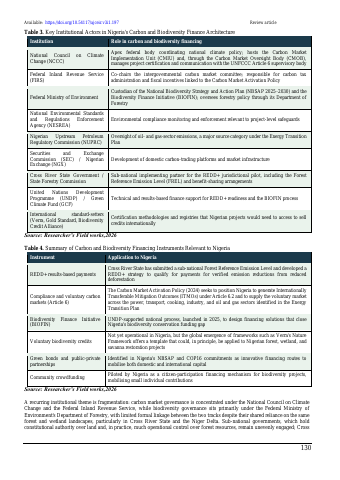
- Nigeria does not yet have an operational biodiversity credit scheme, but has built policy foundations for one.p.7
- Five states alone accounted for 54% of Nigeria's total tree-cover loss between 2001 and 2020.p.2
- The Energy Transition Plan targets five sectors that together account for approximately 65% of national greenhouse gas emissions.p.5
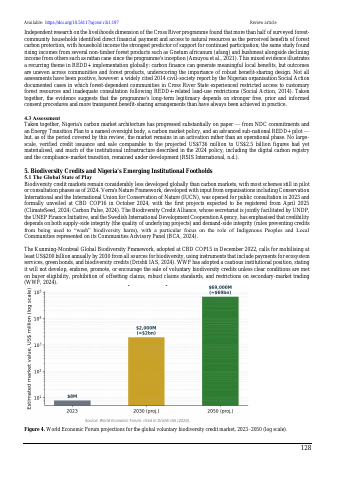
- Evidence from the Cross River REDD+ programme is mixed, with uneven benefits and calls for stronger consent and benefit-sharing.p.6
- Key barriers include limited MRV capacity, no universal biodiversity metric and fragmented governance between federal bodies.p.9
- The window for building these mechanisms before further irreversible ecological loss is narrowing.p.10
Pages
 p.1
 p.2
 p.3
 p.4
 p.5
 p.6
 p.7
 p.8
 p.9
 p.10
Funders mentioned
Topics and entities
Summary and figures generated from the document and checked automatically: every number shown appears on the cited page. Publishers can request removal.