A new media-based framework for climate risk: Evidence from television coverage and clean energy firms (arXiv (Cornell University))
SaveWhat changed
12.42 percentage points decrease
Change in idiosyncratic risk per one unit change in ln VolCov p.14
Summary
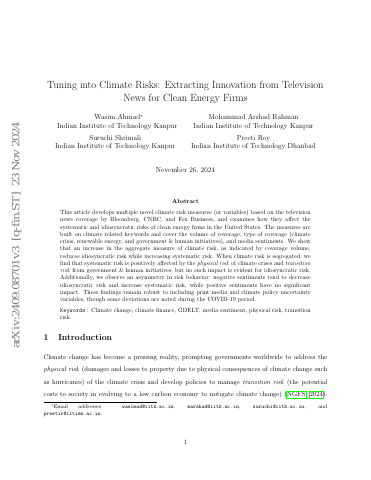
- The paper builds climate risk measures from television news by Bloomberg, CNBC and Fox Business and tests them on U.S. clean energy firms.p.1
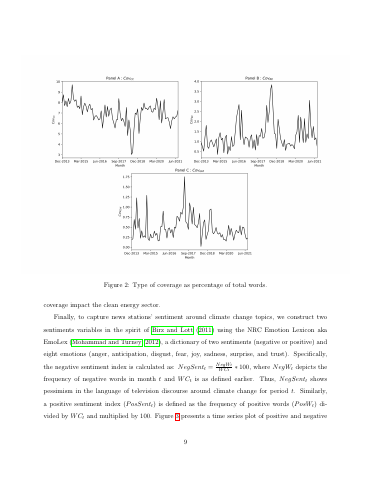
- The keyword search yields a total of 37,948 snippets from the three news channels.p.7
- Data cover December 2013 to August 2021.p.4
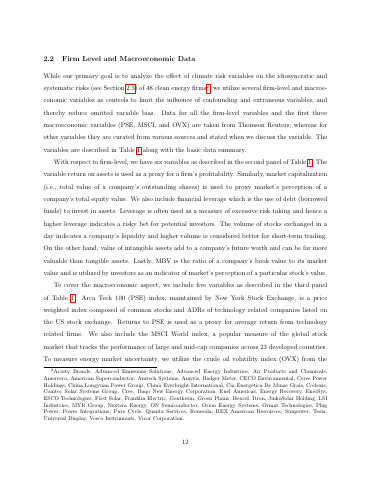
- The analysis covers 48 clean energy firms.p.12
- A one unit change in ln VolCov decreases idiosyncratic risk by 12.42 percentage points and increases systematic risk by 6.45 percentage points.p.14
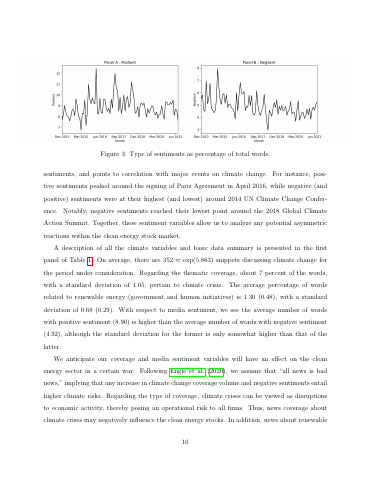
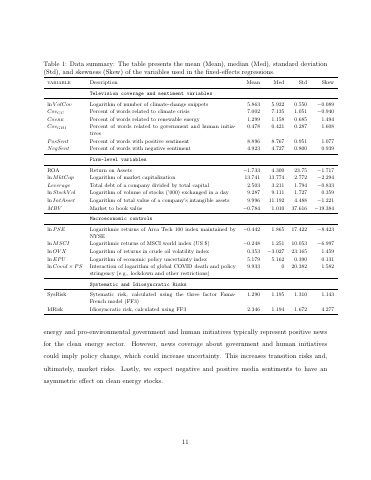
- Average positive sentiment (8.90) exceeds average negative sentiment (4.92) in climate coverage.p.10
Key insights
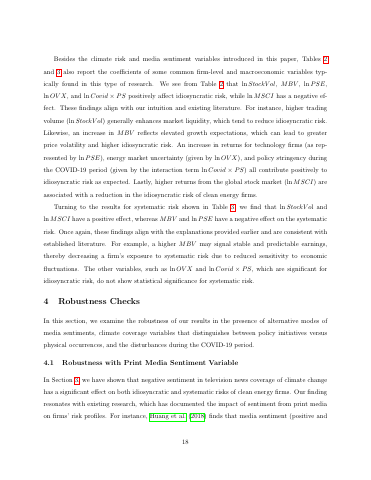
- Higher coverage volume reduces idiosyncratic risk while increasing systematic risk.p.1
- Systematic risk is raised by the physical risk of climate crises and by transition risk from government and human initiatives.p.1
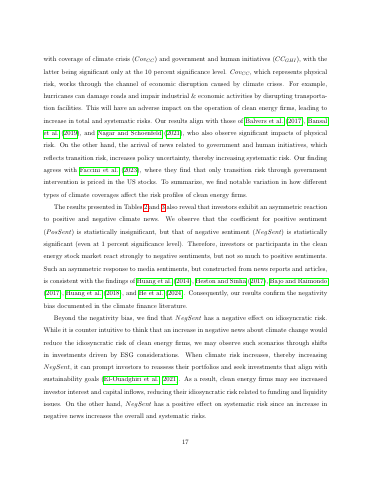
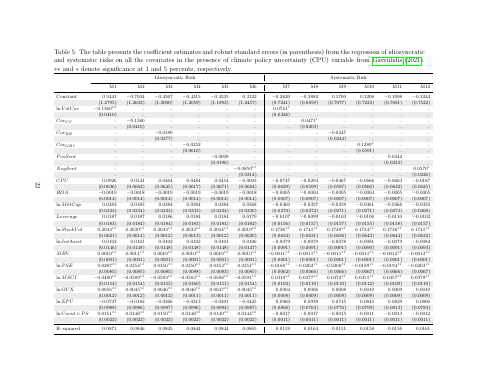
- Negative sentiment decreases idiosyncratic risk and increases systematic risk, while positive sentiment has no significant impact.p.1
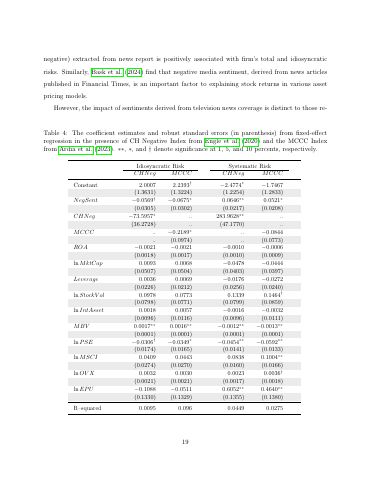
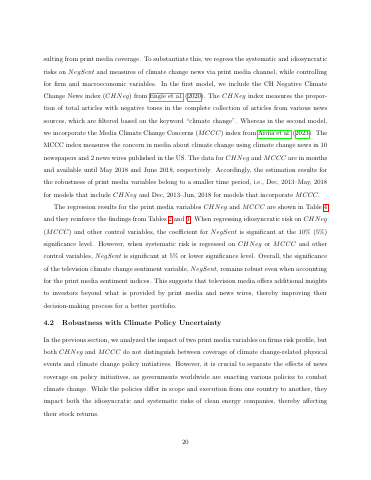
- Results remain robust to including print media and climate policy uncertainty variables.p.1
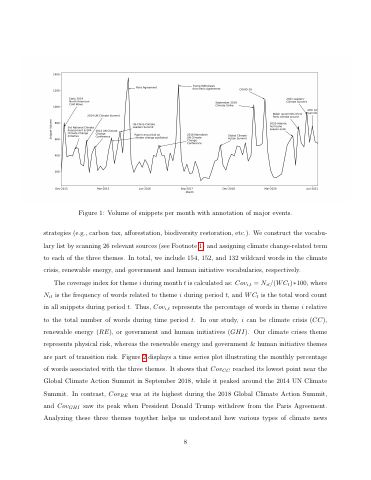
- Vocabularies include 154, 152 and 132 wildcard words for the climate crisis, renewable energy and government and human initiative themes.p.8
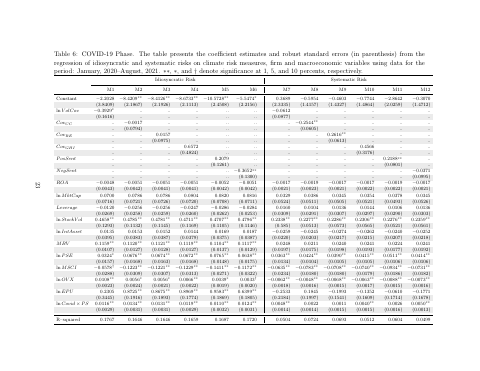
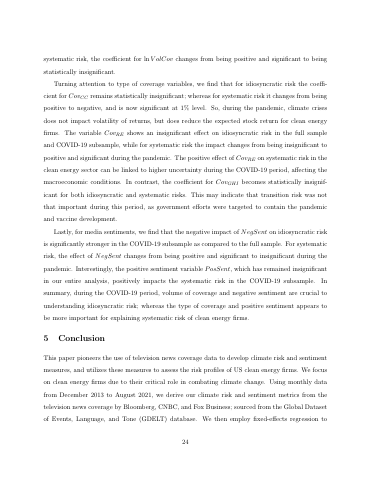
- During the COVID-19 period some results deviate from the full sample.p.24
Pages
 p.1
 p.2
 p.3
 p.4
 p.5
 p.6
 p.7
 p.8
 p.9
 p.10
 p.11
 p.12
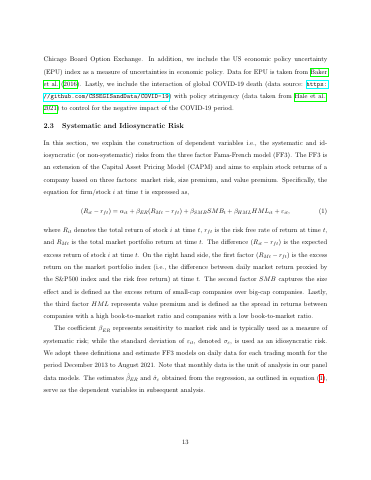 p.13
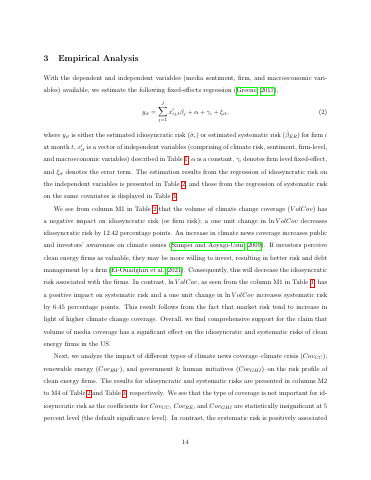 p.14
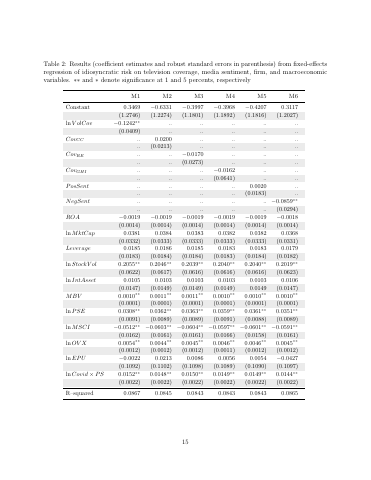 p.15
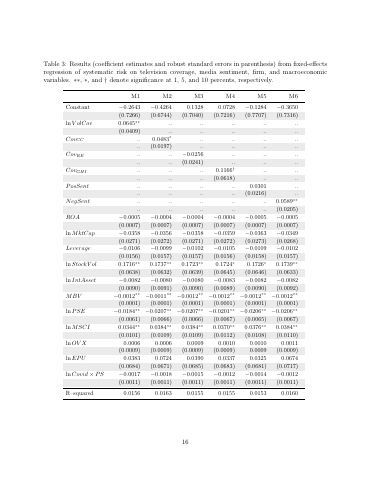 p.16
 p.17
 p.18
 p.19
 p.20
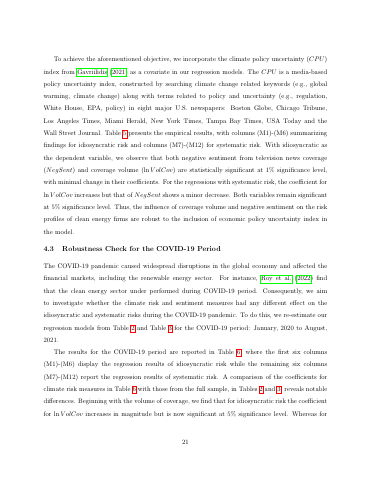 p.21
 p.22
 p.23
 p.24
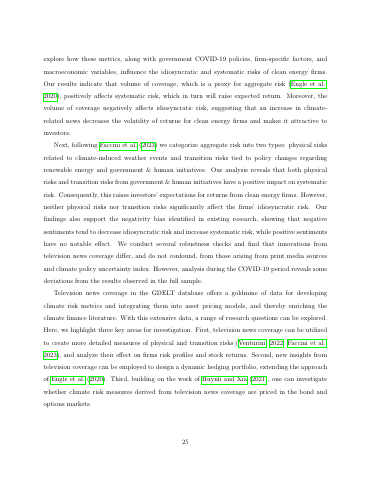 p.25
 p.26
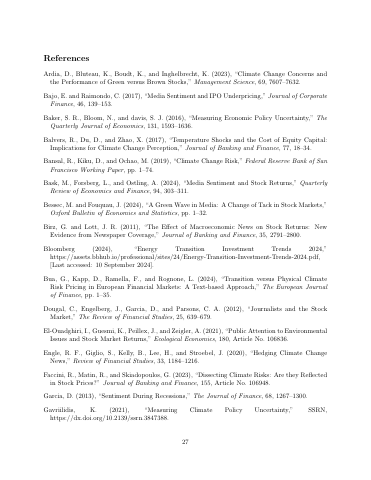 p.27
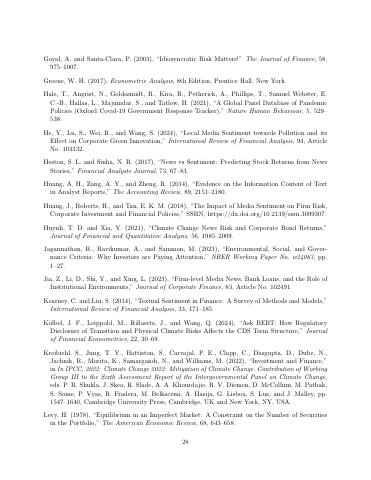 p.28
 p.29
Funders mentioned
Topics and entities
Summary and figures generated from the document and checked automatically: every number shown appears on the cited page. Publishers can request removal.