Venture Capital Survey 2022
The 2022 wave of the survey gathered anonymised responses from 443 venture capital fund managers across 362 VC firms.
656 documents
The 2022 wave of the survey gathered anonymised responses from 443 venture capital fund managers across 362 VC firms.
By August 2021, total crypto asset volume had grown by 230 percent year over year in Asian emerging market economies.
The Banque de France baseline scenario projects the French economy to grow by 2.3% in 2022, down from 3.6% at the start of the year.
The global payment system is estimated to consume 47.3 TWh of energy annually, accounting for roughly 0.2 percent of total global electricity consumption.
Globally, the scale of crypto assets remains relatively small at $2–$3 trillion, or about 1 percent of total market value of financial assets.
European private equity deal activity reached more than EUR 754 billion in 2021, moving well above trend growth.
In late 2021, the Central Bank of The Bahamas recorded around 20,000 active Sand Dollar wallets within a population of about 400,000.
Fintech Note 2022/001 provides guidance on modernizing commercial law frameworks to accommodate technological innovation while mitigating legal risks.
Financial executive sentiment towards open banking increased from 55% in 2019 to 71% in 2021, with 83% agreeing it is a revolution for the industry.
Bitcoin block rewards fell from 12.5 Bitcoins to 6.25 Bitcoins in May 2020.
BigTech firms invested over $2 billion in fintech companies in 2020, with Alphabet generating 23 fintech investments alone.
In Vienna, 44 financing rounds were completed in 2021 (as of July 22), with investment volume increasing from €121 million in the previous year to €464 million.
In Fiscal Year 2021, participating agencies obligated $3.46 billion of SBIR funding and $528.7 million of STTR funding, amounting to a total of $3.99 billion.
Central banks in Brazil, Canada, the Euro Area/Japan, Singapore, South Africa, and Thailand have conducted large-value interbank payment DLT experiments.
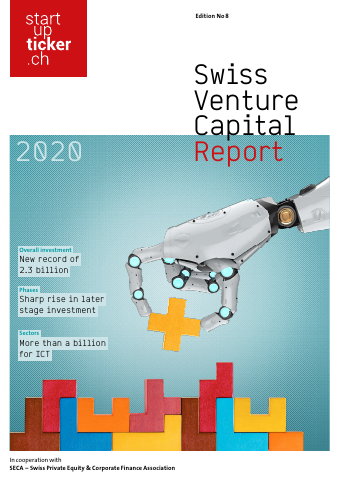
In 2019, almost CHF 2.3 billion was invested in 266 Swiss start-ups, representing an 85.5% increase compared with the previous year.
Total assets under management invested globally in private markets ballooned to an all-time high of US $6.5 trillion.
According to Copenhagen Economics analysis, Swedish GDP is currently 0.8% higher than it would otherwise be due to venture capital.
The IMF note examines the institutional frameworks for fintech regulation and supervision across 10 selected jurisdictions.
In May 2019, major crypto exchange Binance suffered a cyberattack resulting in $41 million in Bitcoin being stolen.
E-money and i-money represent new forms of digital money competing directly with traditional cash and bank deposits.
The estimated $757 billion fresh commitment flows to private capital worldwide in 2018 stands 18% below 2017's record fund raising of $925 billion.
The long-term annual tax revenue expected from the proposal is overestimated by approximately SEK 160 million because it relies on a period of unusually high equity returns.
Skatteverket estimated that the proposed exit tax would increase annual Swedish tax revenues by around 1 billion kronor starting 1 January 2020.
Stockholm attracted 18% of all European Fintech investments in 2014 and 16% over an 11-year period.
Total venture capital investment in Swiss start-ups reached CHF 937.7 million in 2017 across 175 financing rounds.
Switzerland's financial sector employs over 200,000 people and generates nearly ten per cent of the country's gross domestic product.