Keeping Pace with Change: Fintech and the Evolution of Commercial Law
Fintech Note 2022/001 provides guidance on modernizing commercial law frameworks to accommodate technological innovation while mitigating legal risks.
595 documents
Fintech Note 2022/001 provides guidance on modernizing commercial law frameworks to accommodate technological innovation while mitigating legal risks.
Bitcoin block rewards fell from 12.5 Bitcoins to 6.25 Bitcoins in May 2020.
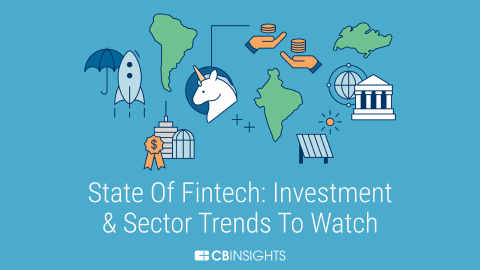
BigTech firms invested over $2 billion in fintech companies in 2020, with Alphabet generating 23 fintech investments alone.
Banks and credit unions remained the main lenders for 63% of SMEs, while 27% applied to government programs and 16% to Crown corporations.
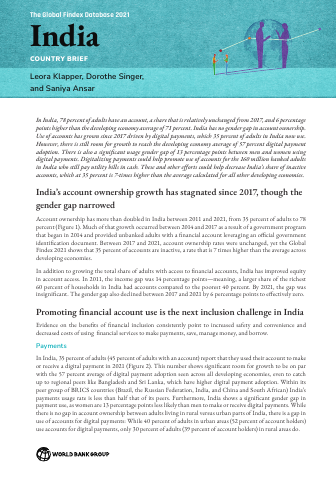
Account ownership in India grew from 35 percent of adults in 2011 to 78 percent in 2021.
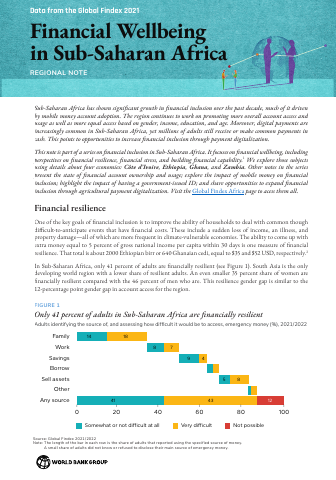
Only 41 percent of adults in Sub-Saharan Africa are financially resilient, defined as being able to access 5 percent of GNI per capita within 30 days.
Worldwide, 78 percent of men have an account, compared to 74 percent of women.
European ecommerce sales are projected by JP Morgan to reach €940 billion by 2023.
The loan approval rate stood at 68% in December 2020 (with 42% fully authorized and 26% partially authorized), down from 77% in October 2020 as requests under review rose to 23%.
Central banks in Brazil, Canada, the Euro Area/Japan, Singapore, South Africa, and Thailand have conducted large-value interbank payment DLT experiments.
Global fintech investment across M&A, PE, and VC reached $135.7 billion across 2,693 deals in 2019.
In 2019, global VC-backed fintech funding reached $34.5B across 1,913 deals, a 15% year-over-year decline largely due to 2018 being inflated by Ant Financial's $14B round.
The IMF note examines the institutional frameworks for fintech regulation and supervision across 10 selected jurisdictions.
Venture capital investment in private cloud companies in Europe and Israel reached $9-9.5bn YTD 2020, up from $7-7.5bn in 2019 YTD.
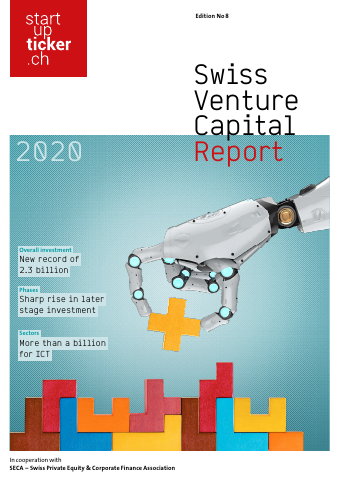
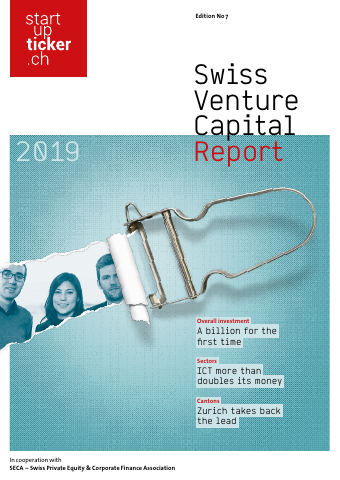
In 2019, almost CHF 2.3 billion was invested in 266 Swiss start-ups, representing an 85.5% increase compared with the previous year.
In May 2019, major crypto exchange Binance suffered a cyberattack resulting in $41 million in Bitcoin being stolen.
E-money and i-money represent new forms of digital money competing directly with traditional cash and bank deposits.
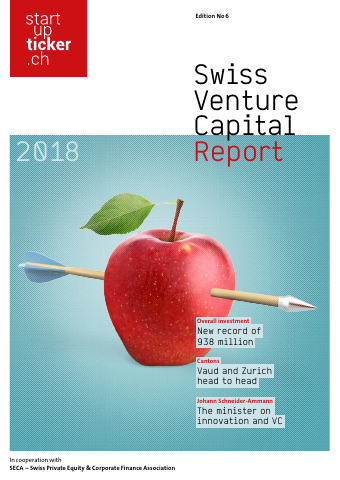
In 2018, nearly CHF 1.24 billion in venture capital was invested in Swiss start-ups, representing an increase of 31.8% on the previous year.
Private equity investments in India reached $26.3 billion across approximately 793 deals in 2018, making it the second-highest investment year of the last decade.
Six out of ten respondents used the mobile payment service Swish during the past month in 2018, compared to around 10 per cent in 2014.
Total venture capital investment in Swiss start-ups reached CHF 937.7 million in 2017 across 175 financing rounds.
Switzerland's financial sector employs over 200,000 people and generates nearly ten per cent of the country's gross domestic product.
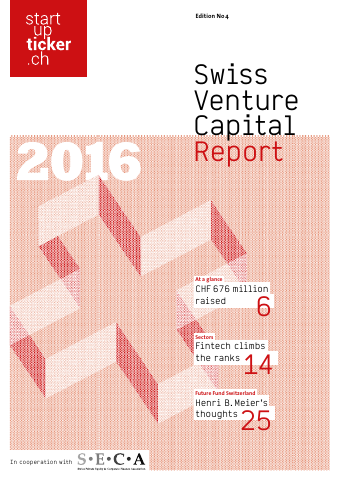
Venture capital investment in Swiss start-ups reached a peak of CHF 676 million across 120 financing rounds in 2015.
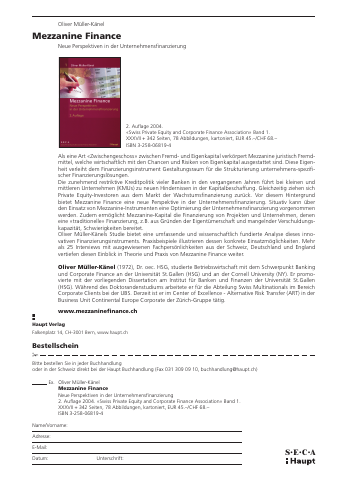
The publication is the 2nd edition released in 2004 as Volume 1 of the Swiss Private Equity and Corporate Finance Association series.
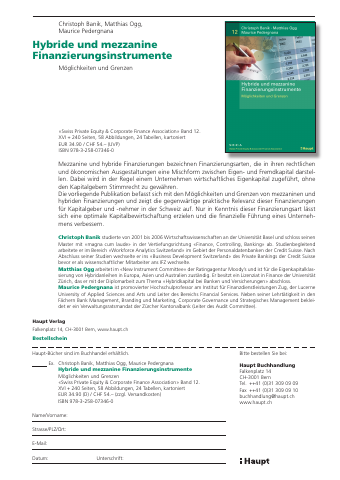
The publication is published as Band 12 of the Swiss Private Equity & Corporate Finance Association book series.