The Impact of Strategic Cost Management and Digital Transformation on Cost Efficiency and Bank Performance in Iraqi Banks (Heritage and Sustainable Development)
SaveSummary
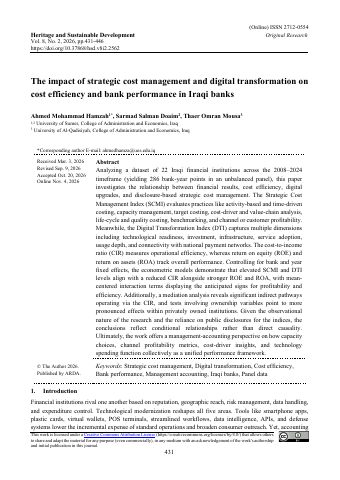
- The study analyzes 22 Iraqi financial institutions over 2008–2024, yielding 286 bank-year points in an unbalanced panel.p.1
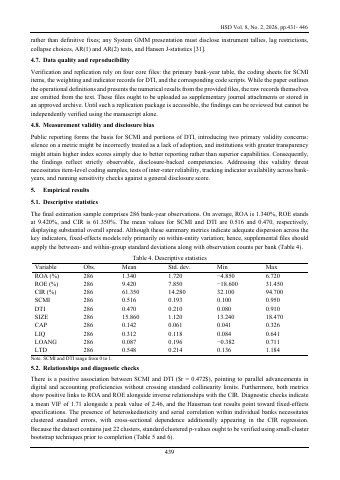
- On average, ROA is 1.340%, ROE is 9.420% and the cost-to-income ratio is 61.350%.p.9
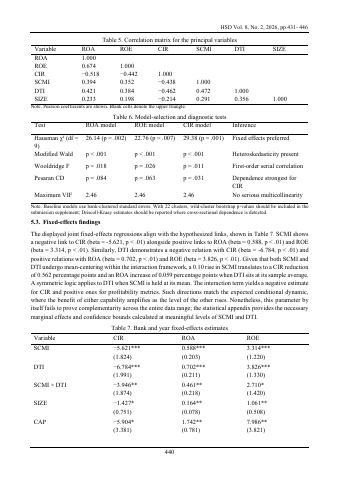
- Strategic cost management shows a negative link to the cost-to-income ratio (beta = -5.621) and positive links to ROA (beta = 0.588) and ROE (beta = 3.314).p.10
- Digital transformation shows a negative relation with the cost-to-income ratio (beta = -6.784) and positive relations with ROA (beta = 0.702) and ROE (beta = 3.826).p.10
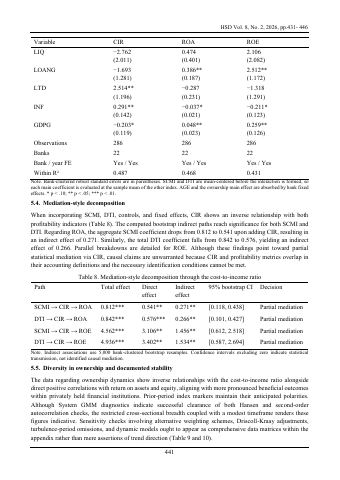
- Adding the cost-to-income ratio reduces the aggregate SCMI coefficient for ROA from 0.812 to 0.541, an indirect effect of 0.271.p.11
Key insights
- The final dataset comprises 286 observations spread across 22 distinct banks.p.6
- A 0.10 rise in SCMI translates to a cost-to-income reduction of 0.562 percentage points and an ROA increase of 0.059 percentage points when DTI is at its sample average.p.10
- Mean values for SCMI and DTI are 0.516 and 0.470 respectively.p.9
- The mediation through the cost-to-income ratio is partial, with an indirect DTI effect of 0.266 on ROA.p.11
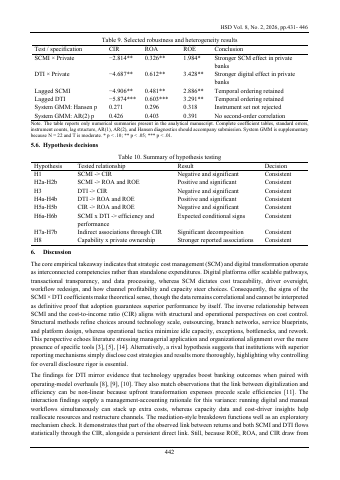
- Capability effects are reported as stronger in private banks than in state-owned banks.p.12
Pages
 p.1
 p.2
 p.3
 p.4
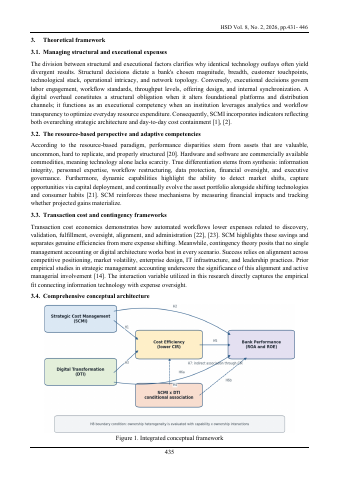 p.5
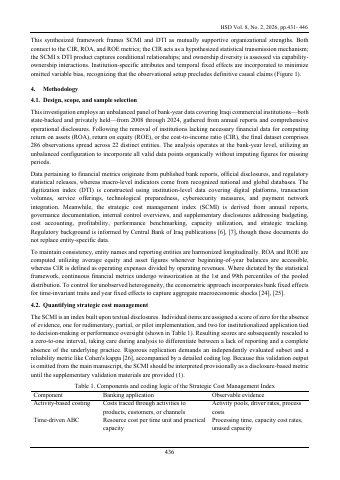 p.6
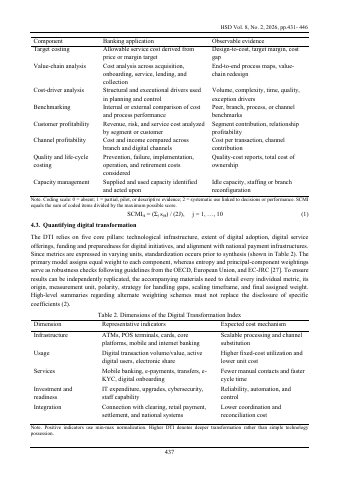 p.7
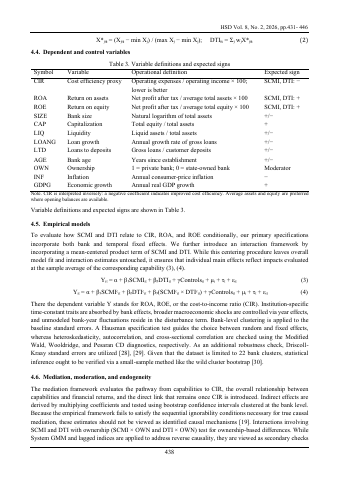 p.8
 p.9
 p.10
 p.11
 p.12
 p.13
 p.14
 p.15
 p.16
Funders mentioned
Topics and entities
Summary and figures generated from the document and checked automatically: every number shown appears on the cited page. Publishers can request removal.