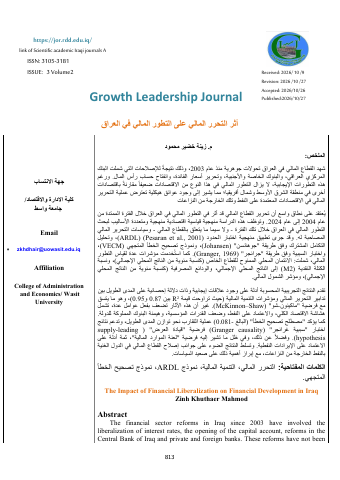
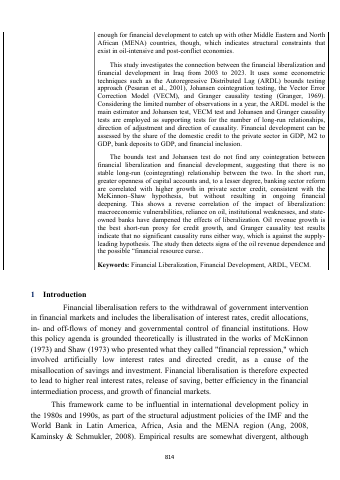
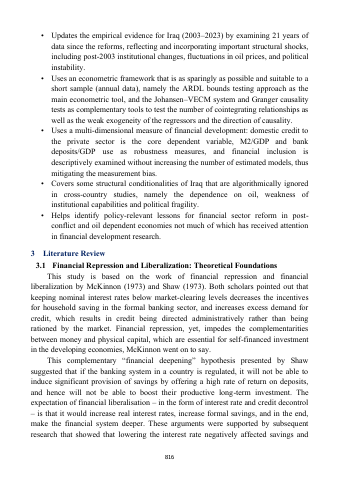
The Impact of Financial Liberalization on Financial Development in Iraq (Growth Leadership Journal)
SaveSummary
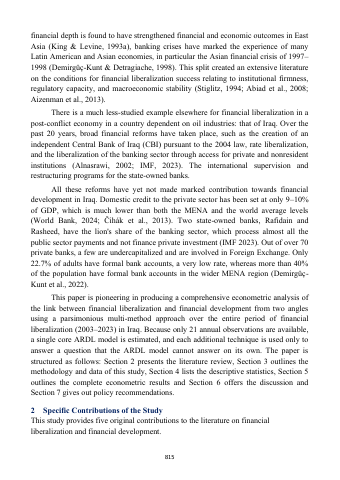
- Domestic credit to the private sector is only 9–10% of GDP in Iraq, and only 22.7% of adults have formal bank accounts.p.3
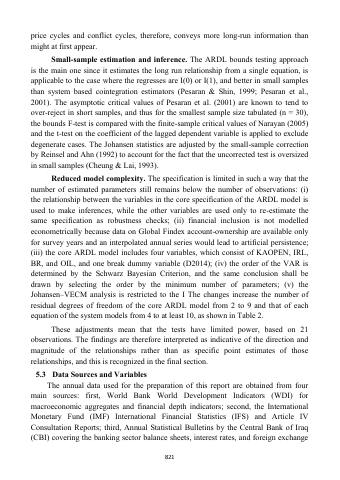
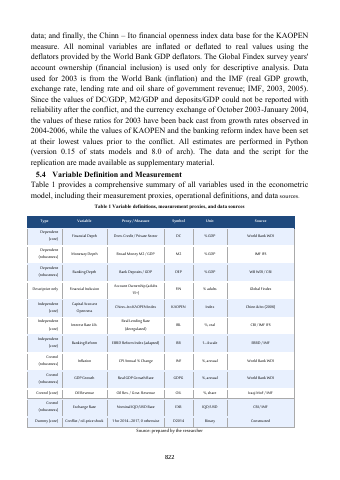
- The analysis uses annual data for 2003–2023, giving 21 observations.p.8
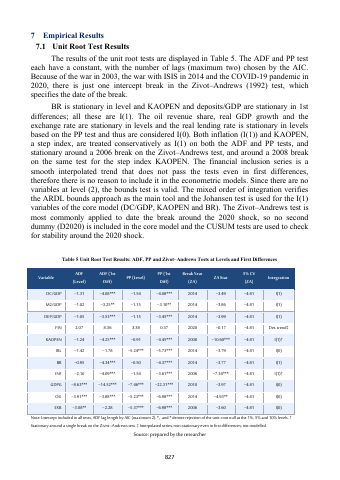
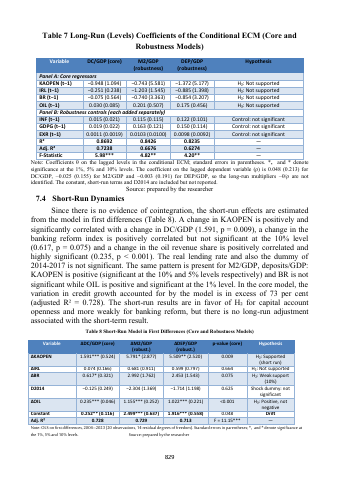
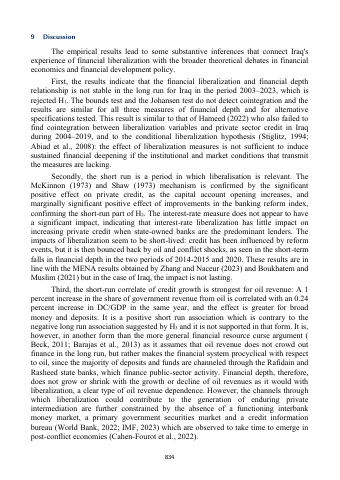
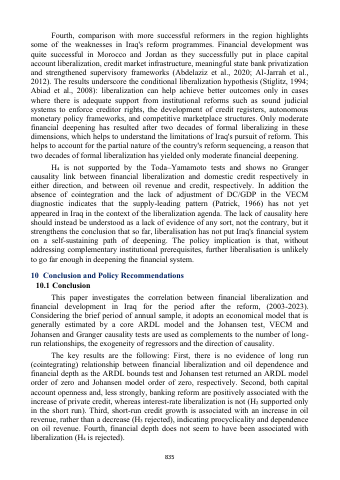
- In the short run, a change in capital account openness is positively correlated with a change in domestic credit to GDP (1.591, p = 0.009).p.17
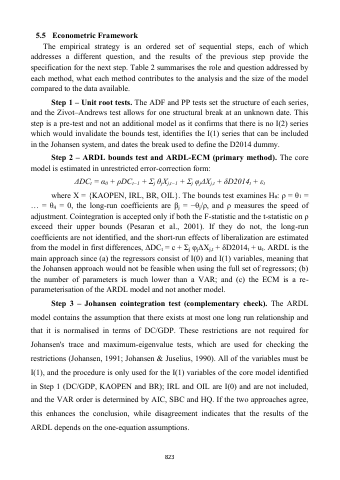
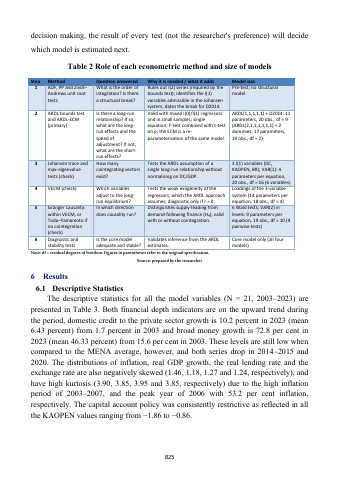
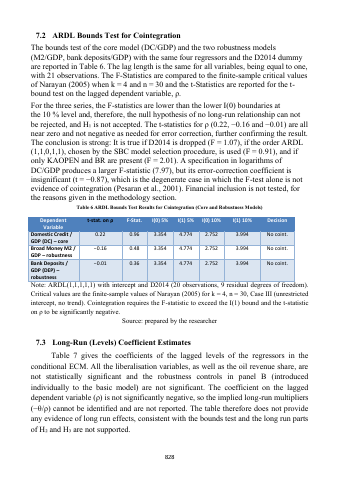
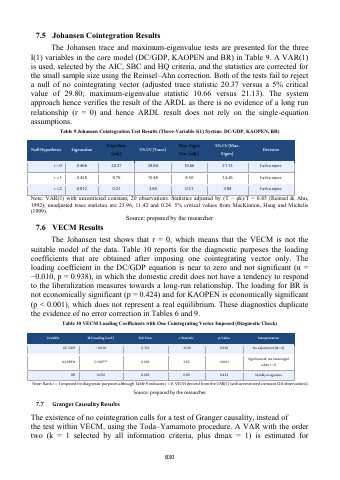
- The Johansen test also finds no cointegrating vector, with an adjusted trace statistic of 20.37 against a 5% critical value of 29.80.p.18
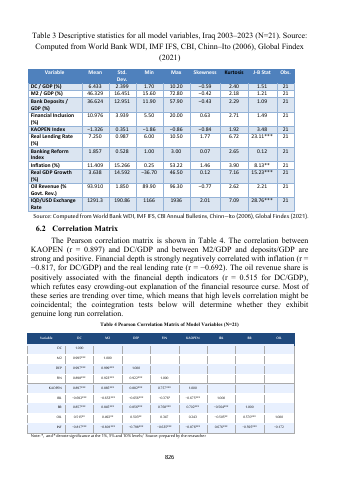
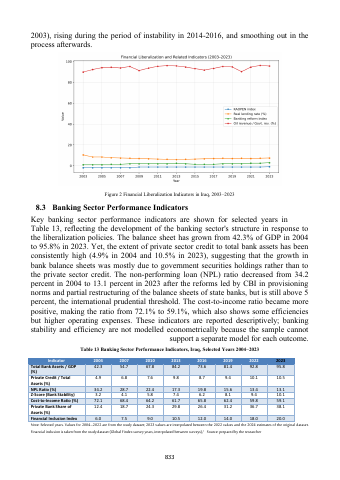
- The NPL ratio decreased from 34.2 percent in 2004 to 13.1 percent in 2023.p.21
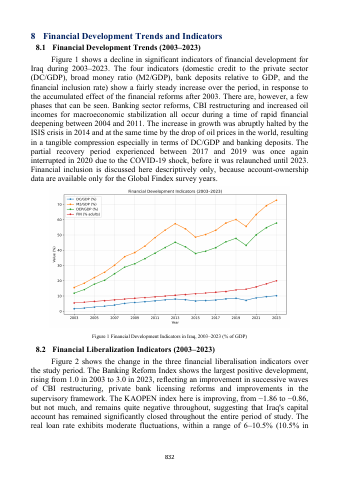
- The Banking Reform Index rose from 1.0 in 2003 to 3.0 in 2023.p.20
Key insights
- Oil revenues accounted for more than 90% of government revenues during the study period.p.6
- Two state-owned banks, Rafidain and Rasheed, hold the lion's share of the banking sector, alongside over 70 private banks.p.3
- Total bank assets grew from 42.3% of GDP in 2004 to 95.8% in 2023.p.21
- Private credit to total bank assets stayed low, at 4.9% in 2004 and 10.5% in 2023.p.21
- The cost-to-income ratio improved from 72.1% to 59.1%.p.21
- The banking reform index change is positively correlated with credit but not significant at the 10% level (0.617, p = 0.075).p.17
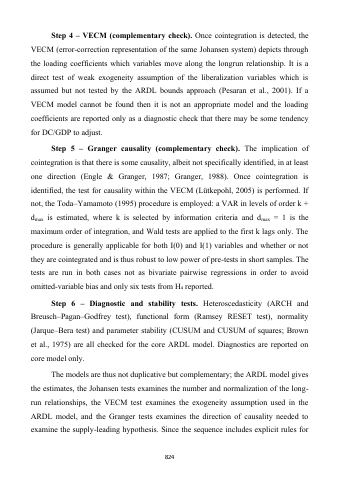
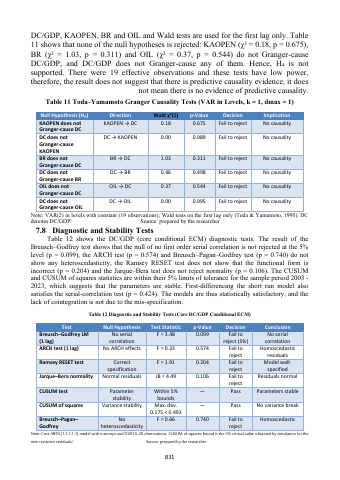
- Toda–Yamamoto tests find no Granger causality, for example from KAOPEN to domestic credit (chi-square 0.18, p = 0.675).p.19
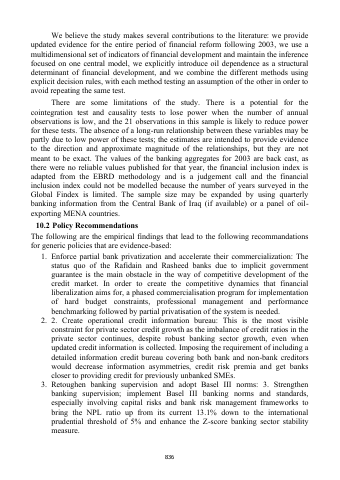
- The 21 observations limit the power of cointegration and causality tests, so the absence of a long-run relationship may be partly due to low power.p.24
Pages
 p.1
 p.2
 p.3
 p.4
 p.5
 p.6
 p.7
 p.8
 p.9
 p.10
 p.11
 p.12
 p.13
 p.14
 p.15
 p.16
 p.17
 p.18
 p.19
 p.20
 p.21
 p.22
 p.23
 p.24
 p.25
 p.26
 p.27
 p.28
 p.29
Funders mentioned
Topics and entities
Summary and figures generated from the document and checked automatically: every number shown appears on the cited page. Publishers can request removal.