Green Economy Implementation and Sustainable Development in Emerging Economies: A Critical Evidence Synthesis (Hasanuddin Economics and Business Review)
SaveSummary
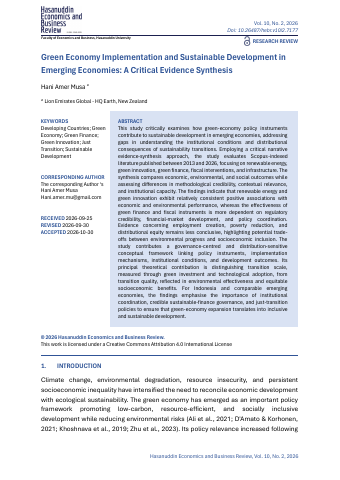
- The review evaluates Scopus-indexed literature published between 2013 and 2026 on renewable energy, green innovation, green finance, fiscal interventions and infrastructure.p.1
- Renewable energy and green innovation show relatively consistent positive associations with economic and environmental performance.p.1
- The effectiveness of green finance and fiscal instruments depends more on regulatory credibility, financial-market development and policy coordination.p.1
- Evidence on employment creation, poverty reduction and distributional equity remains less conclusive.p.1
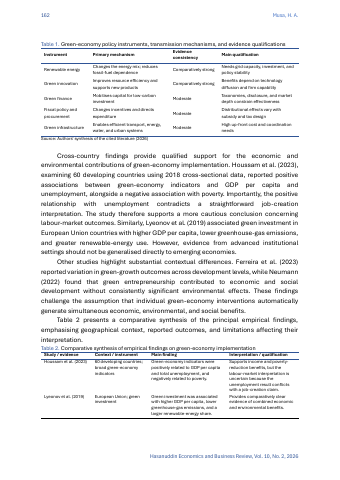
- A study of 60 developing countries using 2018 cross-sectional data found positive associations between green-economy indicators and GDP per capita, and a negative association with poverty.p.8
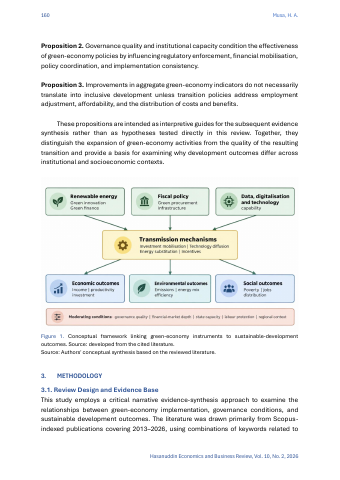
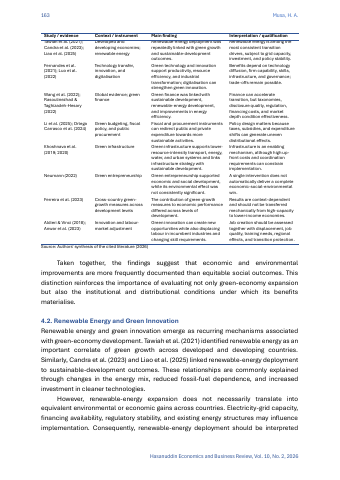
- The literature identifies five major instruments supporting green-economy implementation.p.4
Key insights
- Renewable energy and green innovation are rated as comparatively strong in evidence consistency, while green finance, fiscal policy and green infrastructure are rated moderate.p.8
- The positive association with unemployment found in the 60-country study contradicts a straightforward job-creation interpretation.p.8
- Governance quality is considered a potential moderator of green-economy outcomes rather than merely an accompanying characteristic.p.5
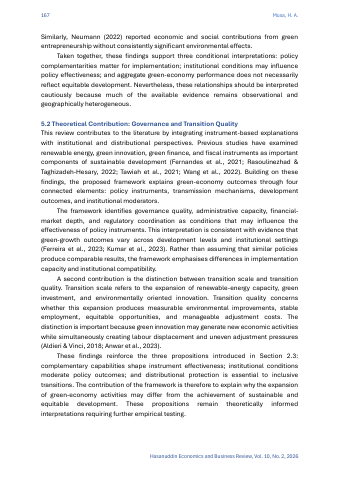
- The study distinguishes transition scale, reflected in green investment and technology adoption, from transition quality, reflected in environmental effectiveness, employment and equity.p.3
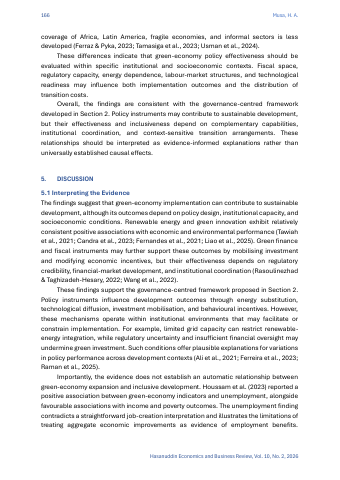
- Coverage of Africa, Latin America, fragile economies and informal sectors is less developed.p.12
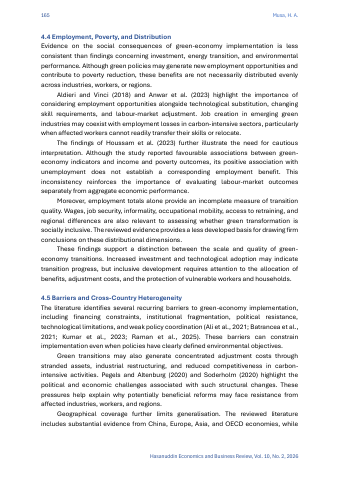
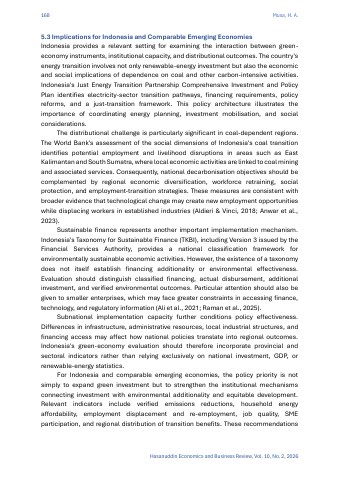
- Coal-dependent regions such as East Kalimantan and South Sumatra face potential employment and livelihood disruptions.p.14
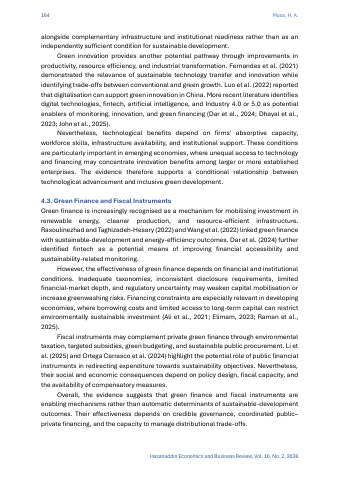
- Technological benefits depend on firms' absorptive capacity, workforce skills, infrastructure and institutional support.p.10
Pages
 p.1
 p.2
 p.3
 p.4
 p.5
 p.6
 p.7
 p.8
 p.9
 p.10
 p.11
 p.12
 p.13
 p.14
 p.15
 p.16
 p.17
 p.18
 p.19
 p.20
Topics and entities
Summary and figures generated from the document and checked automatically: every number shown appears on the cited page. Publishers can request removal.