Can We Trust Their Innovation? Industrial Policy, Takeover Incentives, and Innovation Redirection in Non-Targeted Firms (Research Square)
SaveKey number
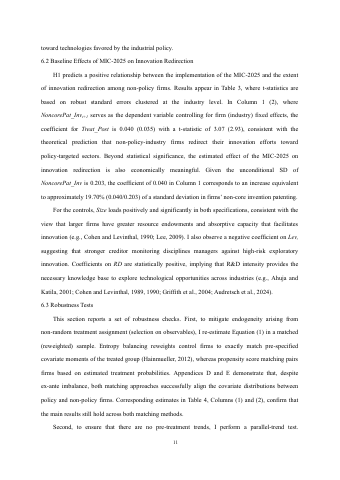
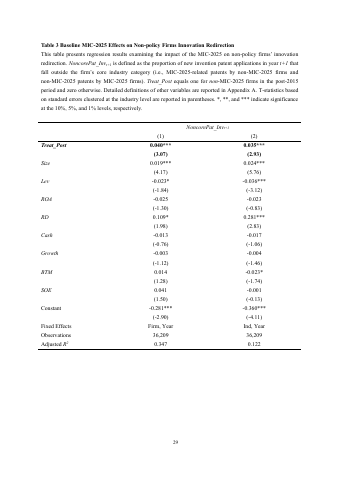
0.040 coefficient
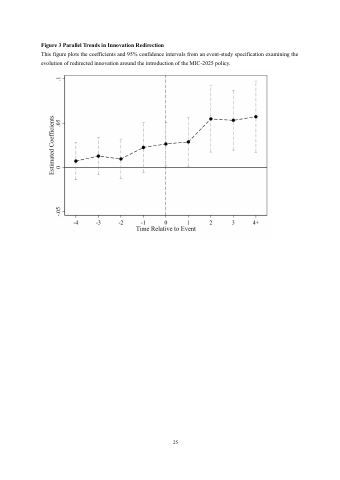
Effect of MIC-2025 on non-core patenting by non-policy firms (Treat_Post) p.12
What changed
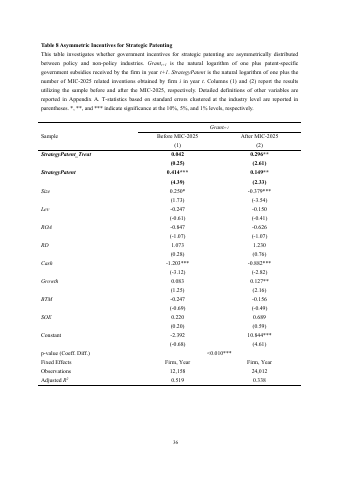
0.414 to 0.149 coefficient
Coefficient on StrategyPatent, pre-policy versus post-policy p.18
Summary
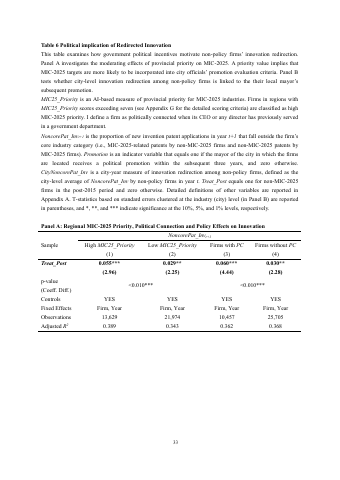
- The Treat_Post coefficient is 0.040 (t-statistic 3.07), equivalent to approximately 19.70% of a standard deviation in firms' non-core invention patenting.p.12
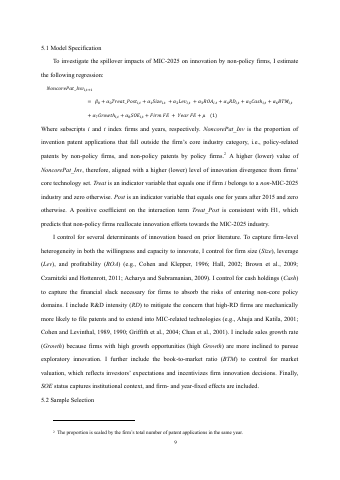
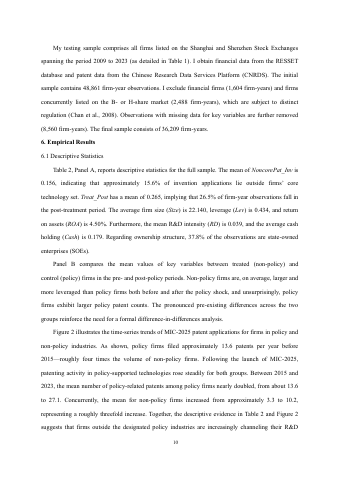
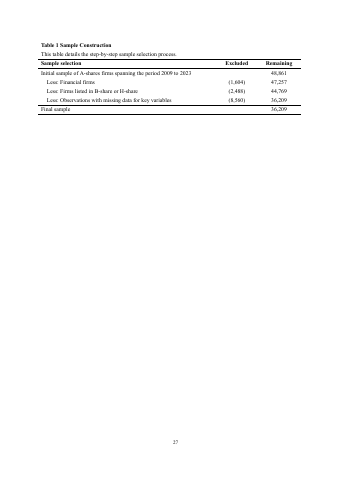
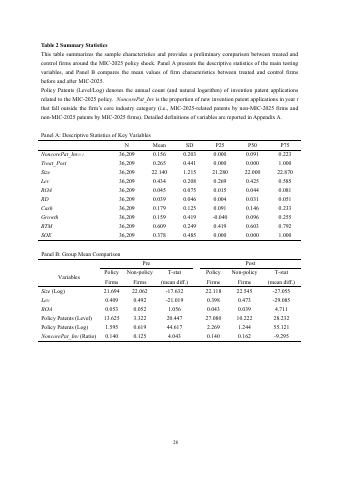
- The final sample consists of 36,209 firm-years of listed firms, spanning 2009 to 2023.p.11
- The mean of NoncorePat_Inv is 0.156, indicating that approximately 15.6% of invention applications lie outside firms' core technology set.p.11
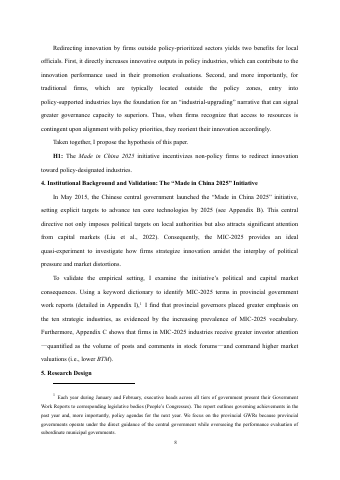
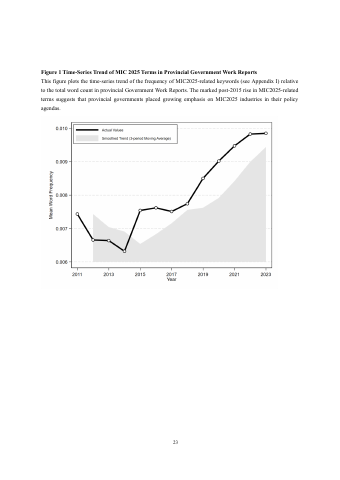
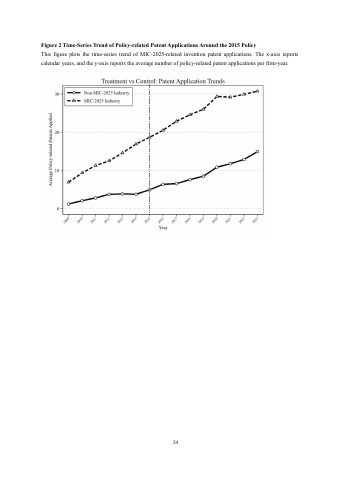
- The Made in China 2025 initiative was launched in May 2015 with targets to advance ten core technologies.p.9
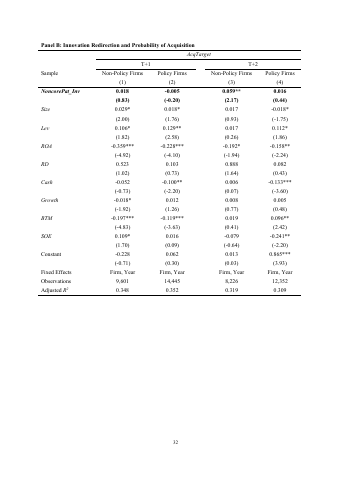
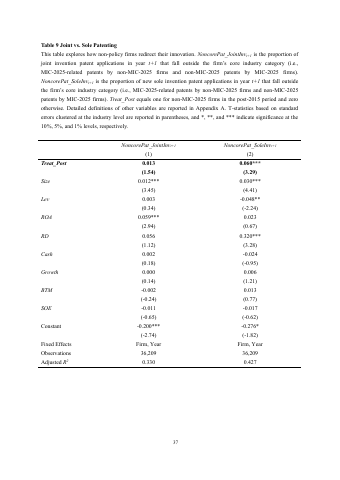
- Treat_Post is 0.060 (t = 3.29) for sole patents versus 0.013 (t = 1.54) for joint patents.p.18
- The coefficient on StrategyPatent falls from 0.414 before the policy to 0.149 after it.p.18
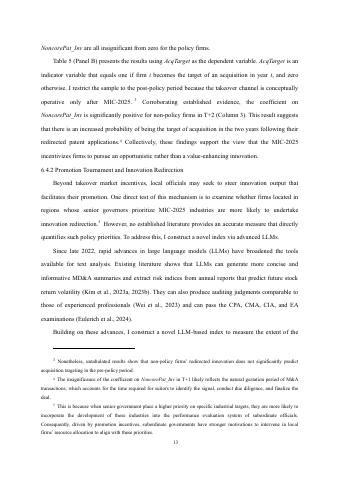
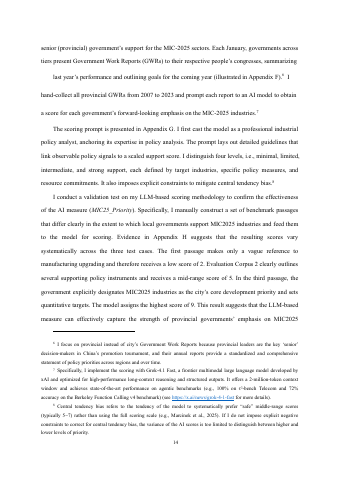
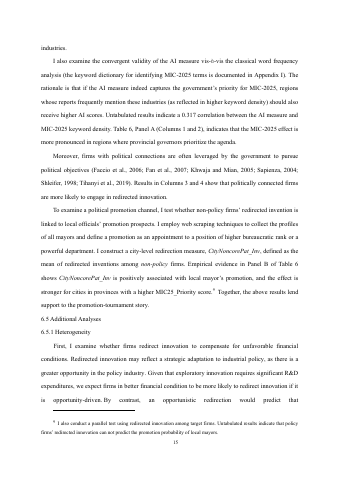
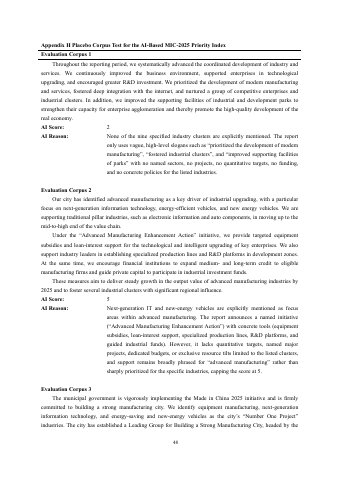
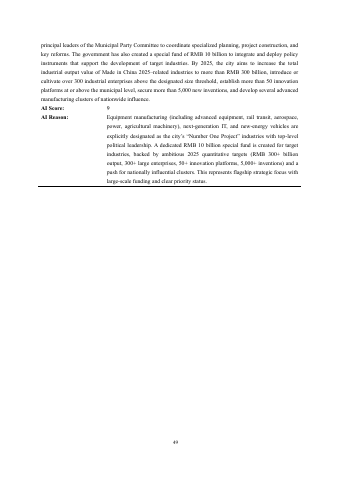
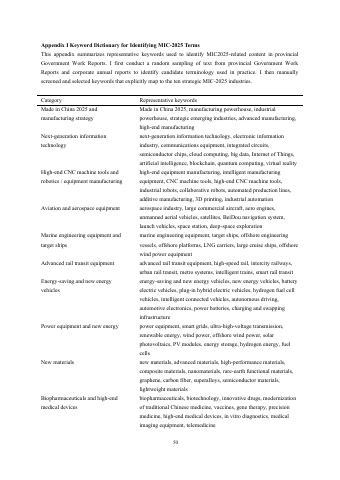
- The AI-based policy priority measure has a 0.317 correlation with MIC-2025 keyword density.p.16
Key insights
- Non-policy firms disproportionately reorient innovation toward policy-favored sectors after Made in China 2025.p.2
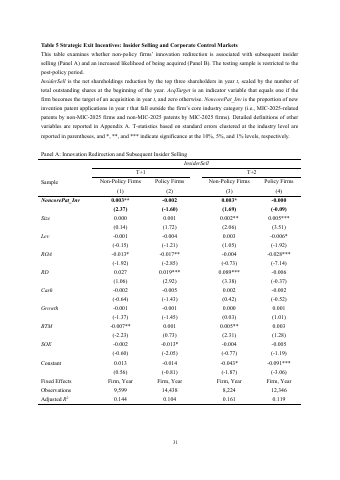
- Redirected innovation is followed by shareholder divestment and an increased probability of being acquired.p.2
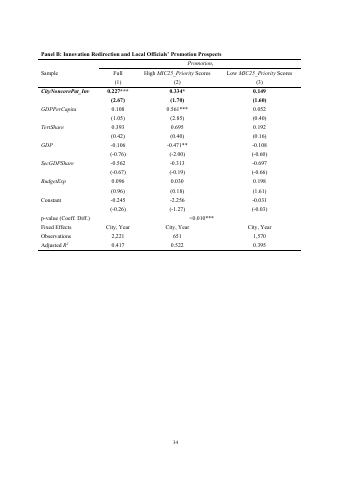
- Redirection is more prevalent in cities where higher-level authorities place greater weight on industrial targets.p.2
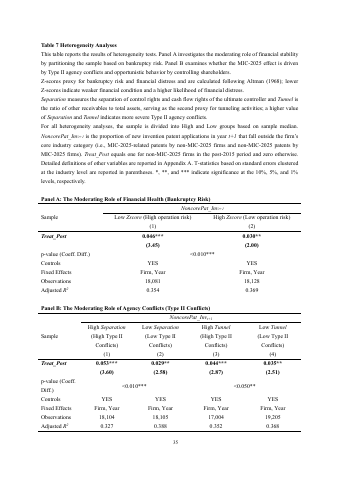
- Redirection concentrates among financially distressed firms and those with minority-shareholder expropriation.p.2
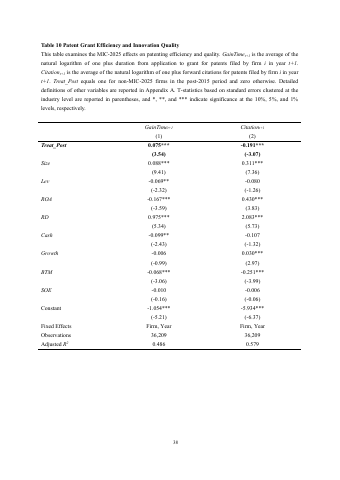
- Redirected innovations coincide with prolonged patent pendency and reduced quality, pointing to a real efficiency loss.p.2
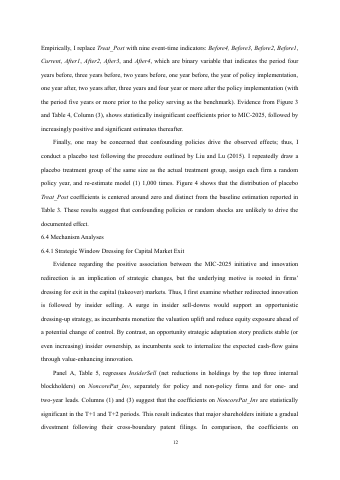
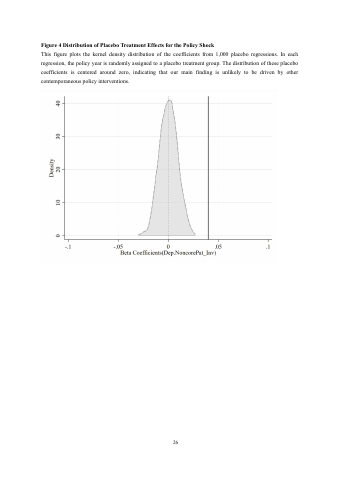
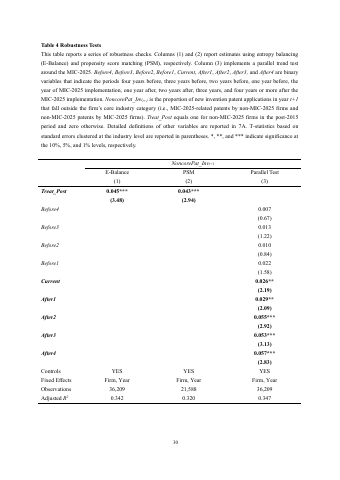
- A placebo test with 1,000 re-estimations gives coefficients centred around zero, so confounding policies are unlikely to drive the result.p.13
- Acquirers should evaluate the technological relevance and quality of a target's innovation rather than relying on patent counts or R&D intensity.p.19
Pages
 p.1
 p.2
 p.3
 p.4
 p.5
 p.6
 p.7
 p.8
 p.9
 p.10
 p.11
 p.12
 p.13
 p.14
 p.15
 p.16
 p.17
 p.18
 p.19
 p.20
 p.21
 p.22
 p.23
 p.24
 p.25
 p.26
 p.27
 p.28
 p.29
 p.30
 p.31
 p.32
 p.33
 p.34
 p.35
 p.36
 p.37
 p.38
 p.39
 p.40
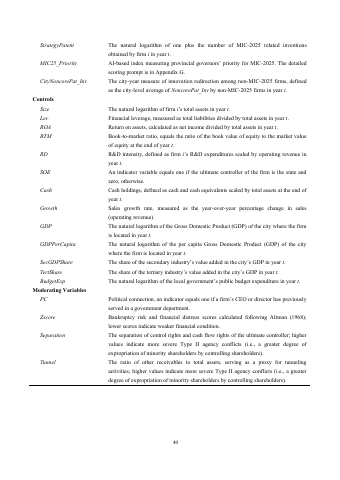 p.41
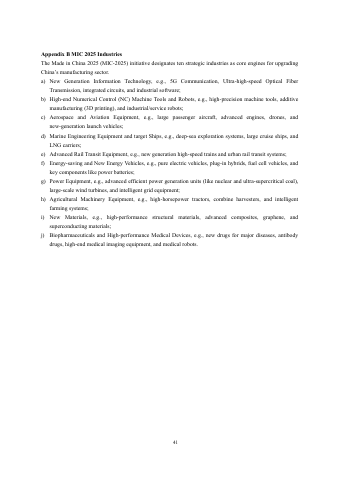 p.42
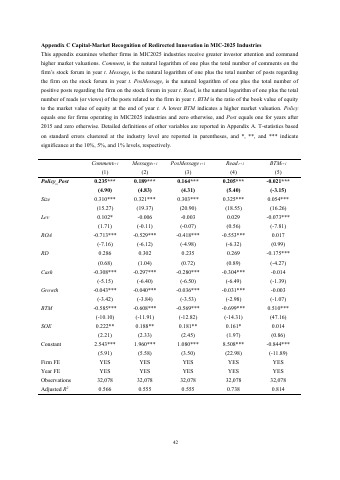 p.43
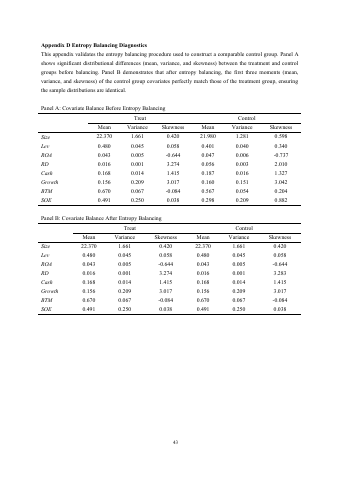 p.44
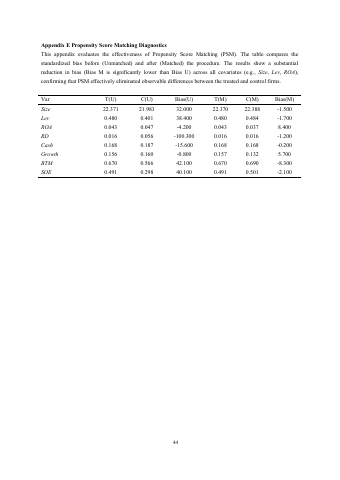 p.45
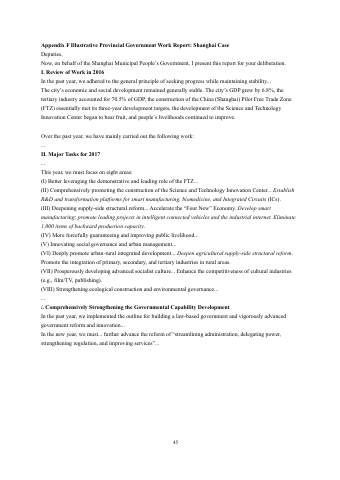 p.46
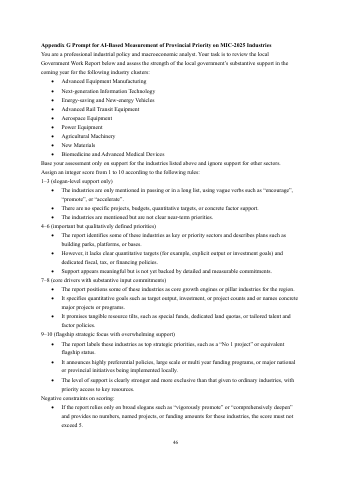 p.47
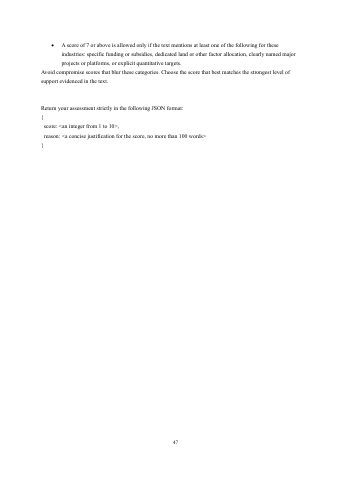 p.48
 p.49
 p.50
 p.51
 p.52
Funders mentioned
Topics and entities
Summary and figures generated from the document and checked automatically: every number shown appears on the cited page. Publishers can request removal.