A Study on the Impact of Restricted Stock Incentives for Core Employees on Corporate Innovation Performance: Analysis of the Mediating Effect of Research & Development Investment (International Journal of Economic Sciences)
SaveKey number
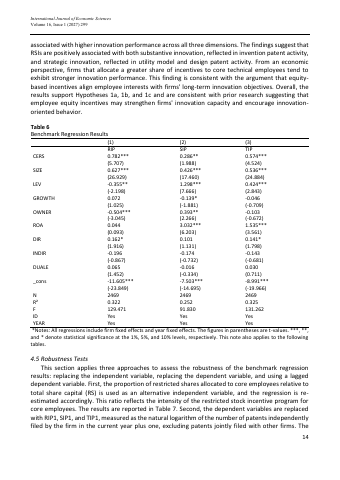
0.574 coefficient
Coefficient of core-employee restricted stock incentives on total innovation performance p.14
Summary
- The study examines A-share listed companies in China from 2014 to 2024 using a fixed-effects model.p.1
- Benchmark coefficients of restricted stock incentives for core employees are 0.782 for substantive, 0.286 for strategic and 0.574 for total innovation performance.p.14
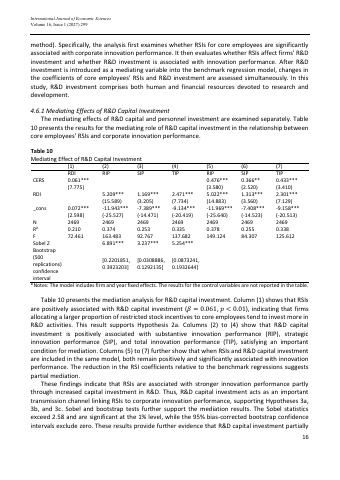
- Restricted stock incentives are positively associated with R&D capital investment, with a coefficient of 0.061.p.16
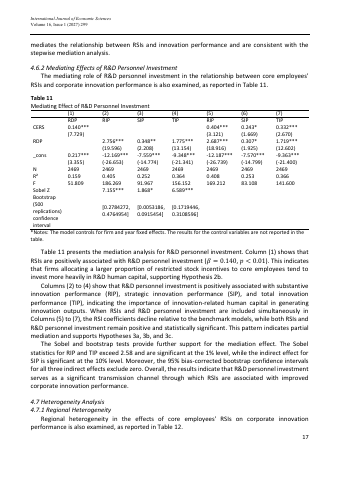
- Restricted stock incentives are positively associated with R&D personnel investment, with a coefficient of 0.140.p.17
Key insights
- Restricted stock incentives for core employees are positively associated with innovation performance across all three dimensions.p.14
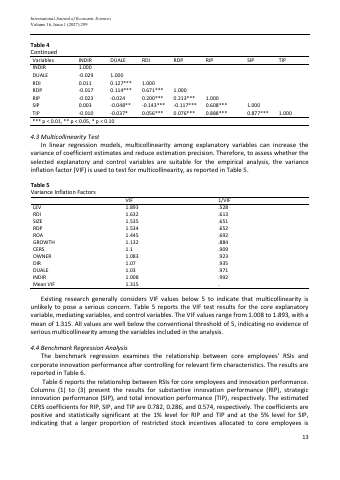
- Variance inflation factors range from 1.008 to 1.893, with a mean of 1.315, indicating no serious multicollinearity.p.13
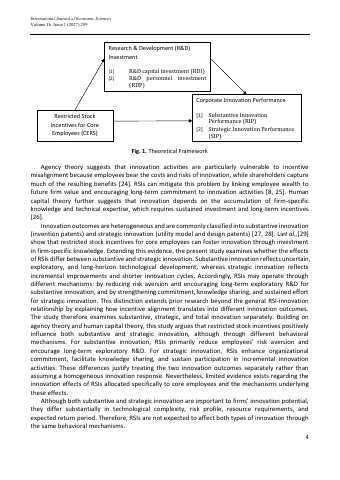
- Both R&D capital and R&D personnel investment are examined as mediators of the link between restricted stock incentives and innovation.p.16
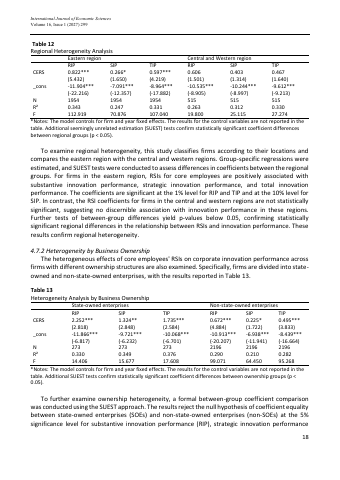
- In the eastern region the coefficients are significant at the 1% level for RIP and TIP and at the 10% level for SIP, while central and western regions show no significant association.p.18
- Tests of between-group differences yield p-values below 0.05, confirming regional differences.p.18
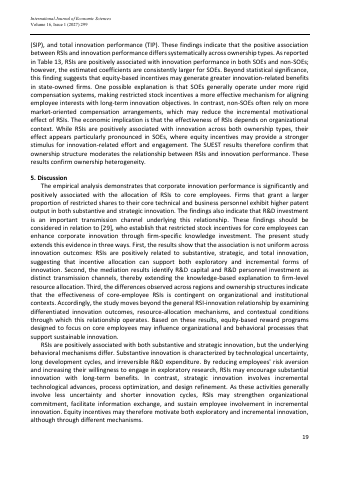
- The positive association is stronger in state-owned enterprises than in non-state-owned firms.p.19
Pages
 p.1
 p.2
 p.3
 p.4
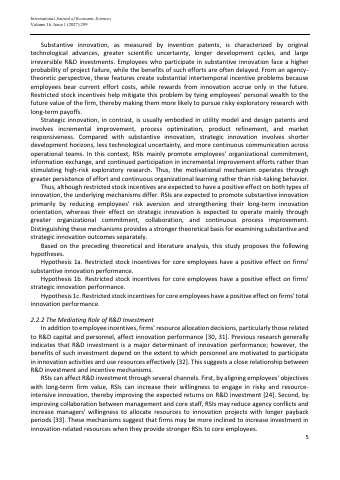 p.5
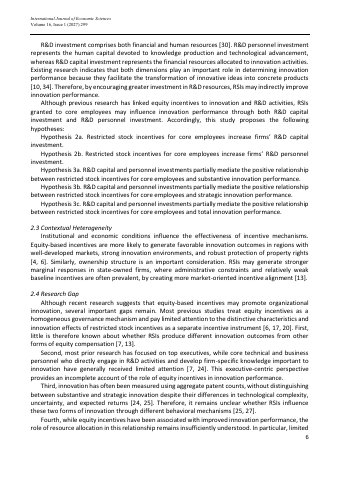 p.6
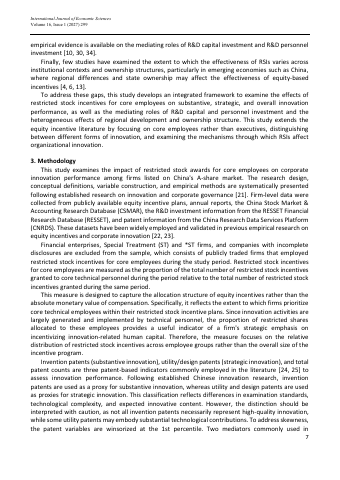 p.7
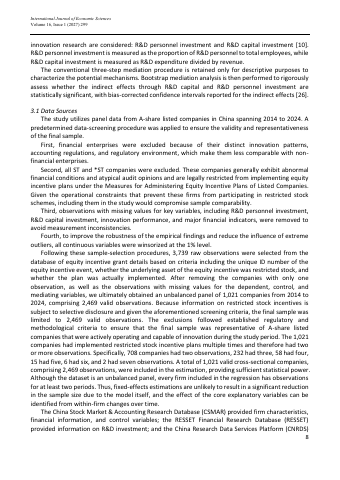 p.8
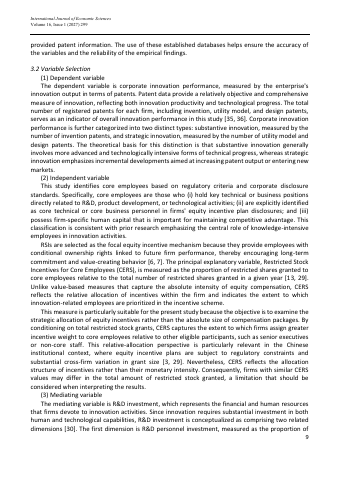 p.9
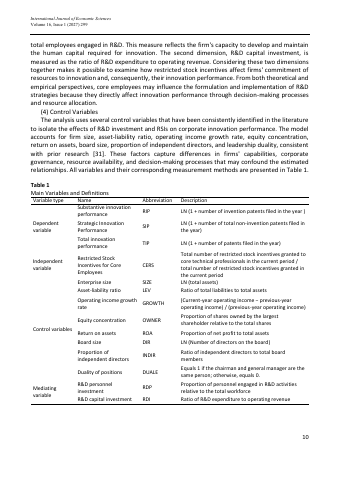 p.10
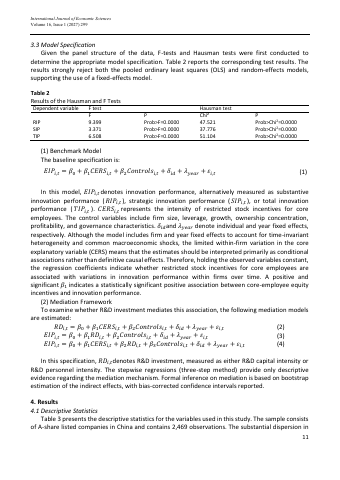 p.11
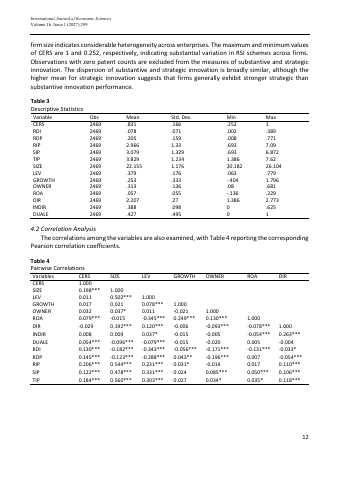 p.12
 p.13
 p.14
 p.15
 p.16
 p.17
 p.18
 p.19
 p.20
 p.21
 p.22
 p.23
 p.24
 p.25
 p.26
Topics and entities
Summary and figures generated from the document and checked automatically: every number shown appears on the cited page. Publishers can request removal.