A Moderating Effect of Inflation on the Impact of Corporate Ownership Structure on the Financial Resilience of Zombie Firms in Sub-Saharan Africa (International Journal of Entrepreneurship and Forensic Management Research)
SaveSummary
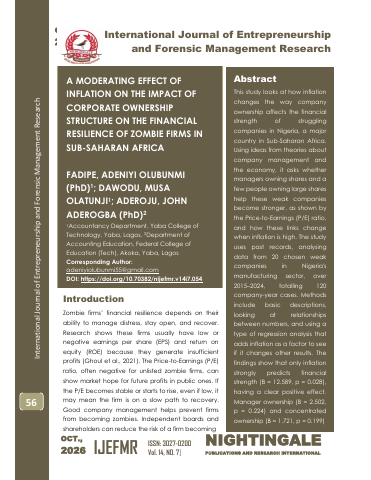
- The study analyses 20 chosen weak companies in Nigeria's manufacturing sector over 2015–2024, totalling 120 company-year cases.p.1
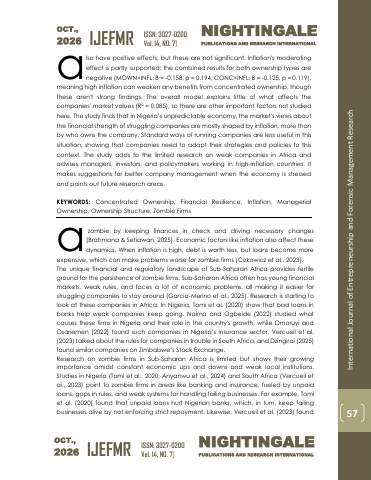
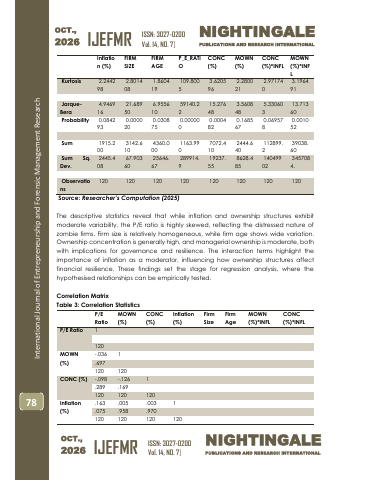
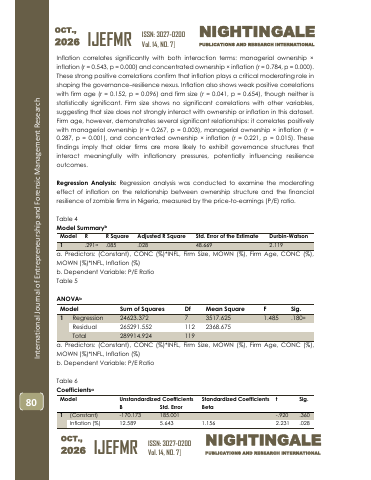
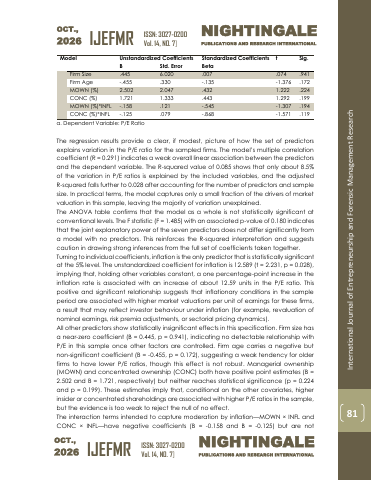
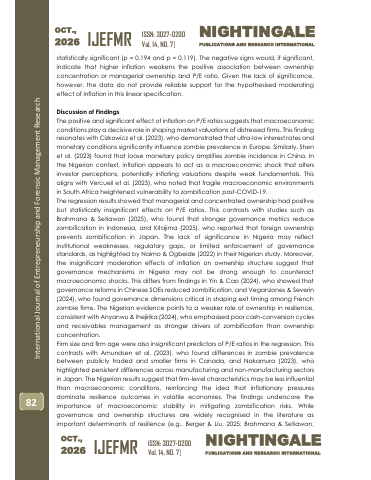
- The inflation interaction terms are negative (MOWN×INFL: B = -0.158, p = 0.194; CONC×INFL: B = -0.125, p = 0.119), though not strong findings.p.2
- The overall model explains little of the companies' market values (R² = 0.085).p.2
- Inflation in Nigeria reached 34.2% in mid-2024.p.5
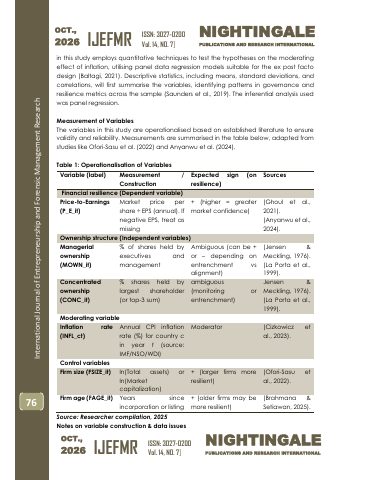
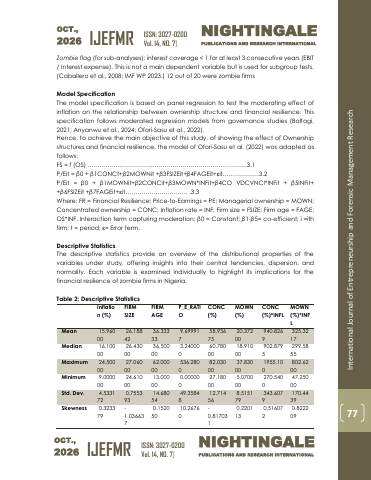
- Firms are flagged as zombies when interest coverage is below 1 for at least 3 consecutive years; 12 out of 20 were zombie firms.p.22
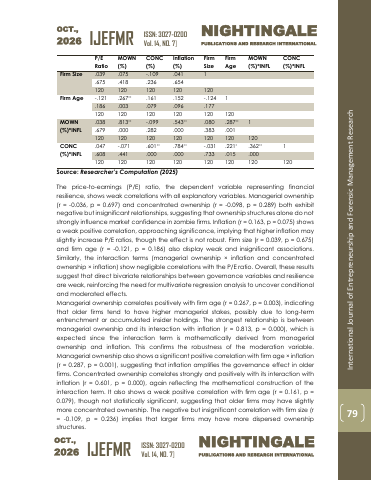
- The P/E ratio shows weak correlations with managerial ownership (r = -0.036, p = 0.697) and concentrated ownership (r = -0.098, p = 0.289).p.24
Key insights
- Market views of struggling companies' financial strength in Nigeria are mostly shaped by inflation more than by who owns the company.p.2
- High inflation can weaken any benefits from concentrated ownership, although the findings are not strong.p.2
- Cited research on 14 OECD countries reports that a 1% drop in interest rates correlates with a 0.5% increase in zombie firm shares.p.7
- Cited research reports that a 1% increase in zombie share reduces multi-factor productivity growth by 0.2-0.3%.p.8
- Inflation correlates significantly with managerial ownership × inflation (r = 0.543) and concentrated ownership × inflation (r = 0.784).p.25
- Financial resilience is defined as a firm's dynamic capacity to maintain operational stability, manage leverage and generate sustainable returns amid distress.p.6
- Weak insolvency regimes and government subsidies can enable failed firms to linger.p.7
Pages
 p.1
 p.2
 p.3
 p.4
 p.5
 p.6
 p.7
 p.8
 p.9
 p.10
 p.11
 p.12
 p.13
 p.14
 p.15
 p.16
 p.17
 p.18
 p.19
 p.20
 p.21
 p.22
 p.23
 p.24
 p.25
 p.26
 p.27
 p.28
 p.29
 p.30
 p.31
 p.32
Funders mentioned
Topics and entities
Summary and figures generated from the document and checked automatically: every number shown appears on the cited page. Publishers can request removal.